Fully booked Bachelor's Degree in Nursing
APPLICATIONS FOR THE 2026-2027 ACADEMIC YEAR ARE CLOSED
You can submit your application for the 2027–2028 academic year


Studying Nursing at UIC Barcelona means committing to people’s health through comprehensive, practical and leadership-oriented training. Our innovative approach prepares you to face the challenges of the sector with scientific rigour, professionalism and dedication to health. From the first year, you will combine theory and practice at our Comprehensive Advanced Simulation Centre and Health Centres. Additionally, you can specialise in three different fields and develop a career with international reach. Here, we believe in your potential to transform nursing and society.
Experience nursing from the first year with placements in healthcare centres. We offer a practicum with 11 rotations (2,300 hours) across various services where you can develop the clinical competencies needed for the profession and experience different nursing roles.
This is a simulation environment of over 1,000 m² with surgical, hospital, and outpatient areas. Practice with cutting-edge technology in training and video recording spaces where you can develop a practice focused on patient safety.
We are pioneers in Spain in implementing the OSCE (Objective Structured Clinical Examination) We assess your clinical competencies with practical tests throughout the degree and train you in our simulation centre with advanced technology.
Study in an academic environment of excellence with expert lecturers and professional healthcare experience. Develop your leadership with a specific programme that enhances skills such as strategic thinking, impact and influence, emotional intelligence, and teamwork.
Share learning with students from other health degree programmes at the Sant Cugat Campus. This interprofessional approach broadens your perspective and prepares you for working in real healthcare teams.
Choose from three specialisations: Advanced Clinical Care, Community Care, or International Nursing. We prepare you for a career with impact in hospitals, primary care, and socio-health environments globally. You can continue your postgraduate studies and even pursue a doctorate.
In the Bachelor’s Degree in Nursing at UIC Barcelona, we offer academic excellence combining experiential training with scientific rigour. With the support of healthcare experts, we prepare you to respond to the needs of the sector. These figures support the educational quality of our programme:
At UIC Barcelona, we train you to develop your professional career, both locally, nationally and internationally, within different clinical settings: hospitals, primary care centres and social-health centres. We train you in the four areas of nursing:
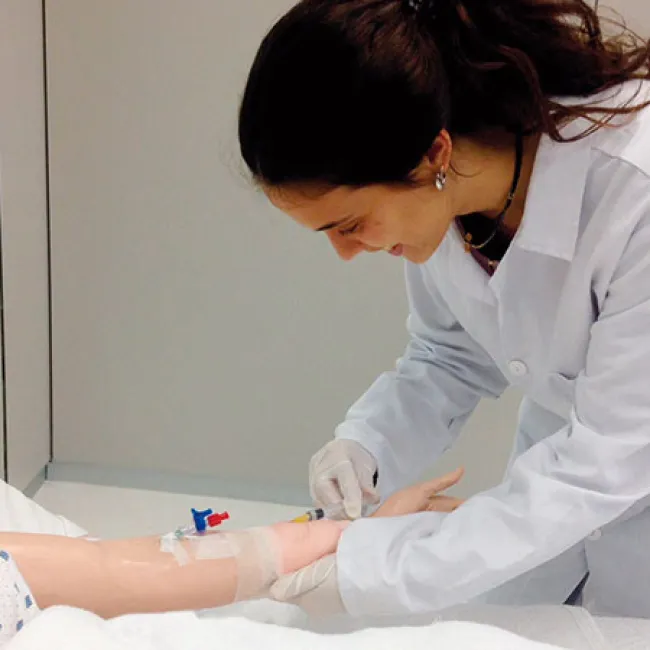
For me, UIC Barcelona is a place where I can expand my knowledge and values, in an international environment with personalised attention from specialised professionals. It’s more than just a university because they offer the opportunity to enjoy an experience abroad, as well as extracurricular activities. Additionally, we can start doing placements from the beginning of the degree thanks to the different collaboration agreements with the University.
We have expert teachers, very well-equipped simulation classrooms and a wide range of centres where we can do internships to help us train as nurses and grow as people.
At UIC Barcelona, we collaborate with hospitals, health centres, and other institutions to provide you with clinical and training experiences that prepare you for the professional challenges of nursing.
Our mission is to improve the health ofour society. To this end you will develop international compe-tences through individual attention.
Further your commitment to public health and learn through self-discipline. We strive to ensure that you become a competent, reflexive professional who is capable of adapting to change and the needs of today's society.
The curriculum for the Bachelor’s Degree in Nursing at UIC Barcelona has been designed to teach students using active educational methodologies with a strong focus on leadership.
The curriculum also allows students to work in healthcare facilities and interact with patients from the first year, and to complement their theoretical and practical learning in simulation laboratories, also from day one.
These are our values:
We believe in your ability to become a nursing professional capable of providing efficient solutions.
Our education is target-based. The Bachelor's Degree in Nursing will provide:
If you are proactive, committed to society and feel the field of health and science is your calling, nurs-ing is the right profession for you. We recommend you have a background in health sciences.
Our nursing students share the following aptitudes:
Graduado o Graduada en Enfermería por la Universitat Internacional de Catalunya.
If you wanted, you could also obtain one of the following three degree programme specialisations:
The student's learning experience extends beyond the limits of the classroom into what will become their future care-giving setting.
Throughout the practical programme, students will learn to:
The Universitat Internacional de Catalunya offers students the chance to undertake a clinical practicum at the end of their first year. These are carried out in prestigious hospitals and primary care centres that work with accredited teaching professionals.
Each student is tutored by a healthcare professional during the practicum (clinical tutor). In addition, a university lecturer (academic tutor) monitors the student through visits to the practicum centre, to ensure the student's learning and satisfaction and encourage reflection on the experience.
The coordinator and practicum tutor plan and oversee the student’s experience to ensure that it is successful.
Clinical practicums are distributed throughout the degree programme as follows:
The distribution of places and assigned shifts according to the student's personal practical curriculum will be planned well in advance and individual interviews will be scheduled with each student to assign each placement.
It is important to remember that placement’s shifts do not follow the academic timetable, and may vary according to the centre offering the placement. The student must adapt to the shifts they are given, which may be morning/afternoon/night, or covering the busiest period of the day.
Practicum weeks by subject and year:
| YEAR | SUBJECT | CATEGORY | PRACTICUM WEEKS |
|---|---|---|---|
| First year | Introductory Practicum | P.E.* | 6 WEEKS |
| Second year | General Practicum I | P.E. | 6 WEEKS |
| General Practicum II | P.E. | 5 WEEKS | |
| Third year | Advanced Practicum I | P.E. | 4 WEEKS |
| Advanced Practicum II | P.E. | 4 WEEKS | |
| Advanced Practicum III | P.E. | 4.5 WEEKS | |
| Advanced Practicum IV | P.E. | 4.5 WEEKS | |
| Fourth year | Synthesis Practicum I | P.E. | 6 WEEKS |
| Profile Practicum I | O.P.** | 4 WEEKS | |
| Profile Practicum II | O.P. | 4 WEEKS | |
| Synthesis Practicum II | P.E. | 6 WEEKS |
* Compulsory external internship
** Optional subject that the student must take with or without mention
This distribution ensures compliance with the European Union directive on clinical practice in nursing studies, which establishes that the minimum be 2,300 hours of practical experience in healthcare settings.
The Final Degree Project is a compulsory subject equivalent to 12 ECTS. It forms part of the Bachelor’s Degree in Nursing and is a requirement of the 4th year of the Bachelor’s degree, when it will also be submitted and marked. As outlined in Order CIN 2134/2008 of 3 July, the Final Degree Project (TFG) is a cross-disciplinary subject of which the content will be related to a variety of subject matters. The TFG is fundamentally a self-led project that each student will complete under the guidance of a tutor, who will help to motivate and facilitate their learning. The TFG must demonstrate the acquisition of competences and content received during the Bachelor’s Degree in Nursing and, in this sense, be presented as a comprehensive piece of work.
Upon completing the Final Degree Project, students will be able to:
At UIC Barcelona, our facilities are designed to offer you comprehensive, high-quality training in Nursing. From the Comprehensive Centre for Advanced Simulation (CISA) to our palliative care clinic, every space is designed to provide you with a practical, multidisciplinary, and excellence-driven experience These resources and collaborations ensure you are trained as a competent and health-focused professional.
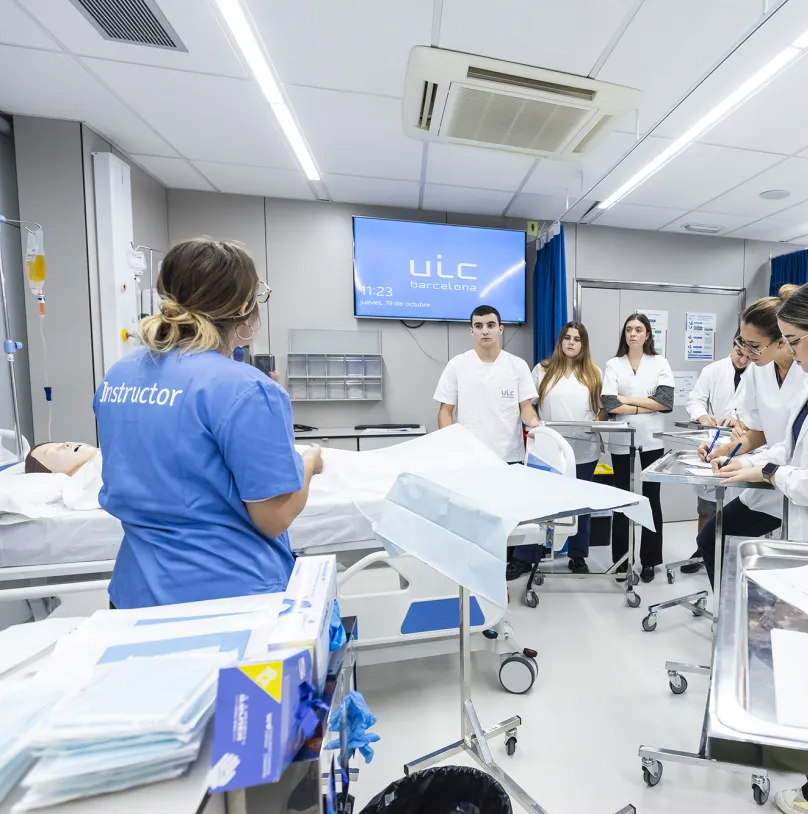
Centre of over 1,000 m² with spaces dedicated to advanced clinical simulation. It offers a realistic environment for developing nursing skills and competencies, improving students' preparation in practical and professional scenarios.
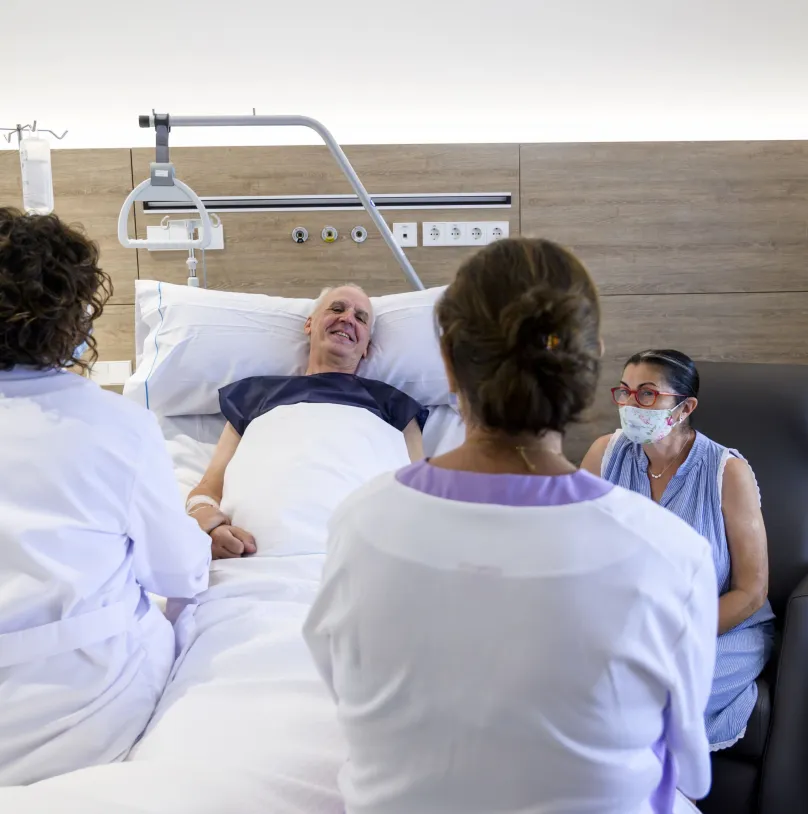
The first university clinic focused on the comprehensive care of patients with oncological and non-oncological diseases. We provide palliative care and improve the quality of life of those with advanced needs in an educational and professional environment.
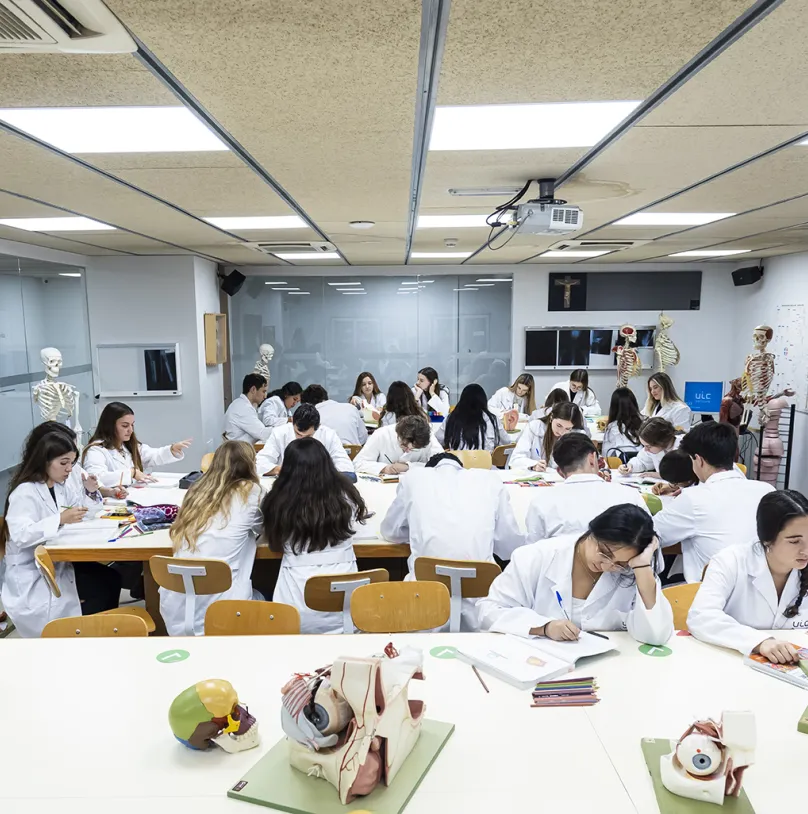
Modern space of 250 m² with three dissection laboratories and a bone repository. It provides practical training on human anatomy, allowing students to further their surgical knowledge and skills in a controlled and advanced environment.
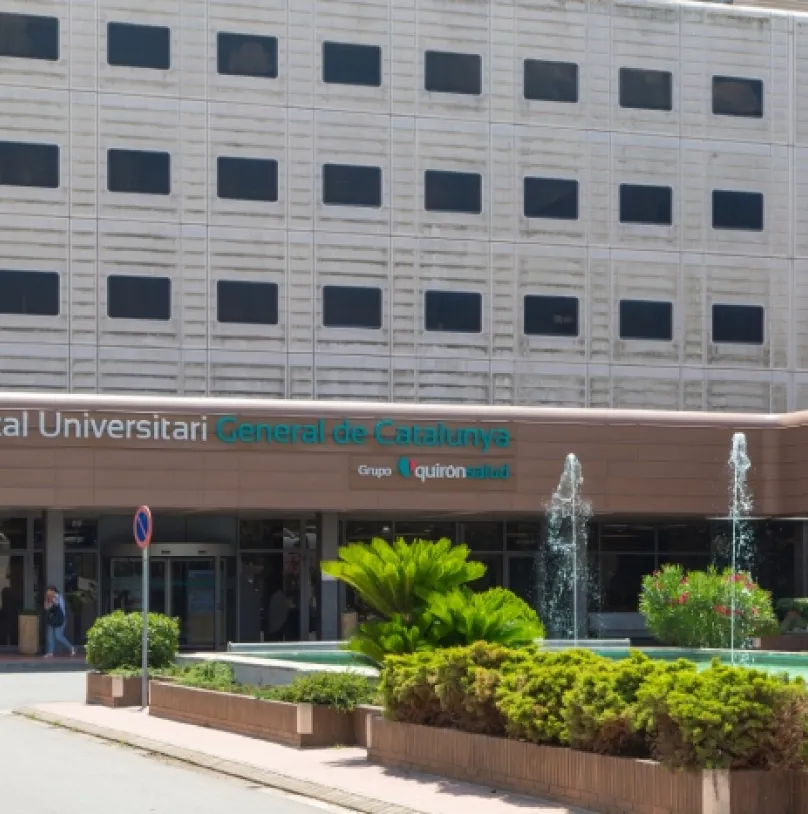
Thanks to its integration with UIC Barcelona, students gain real clinical experience. The synergies between the hospital and the University guarantee a practical and immersive education in a hospital environment, training competent professionals.
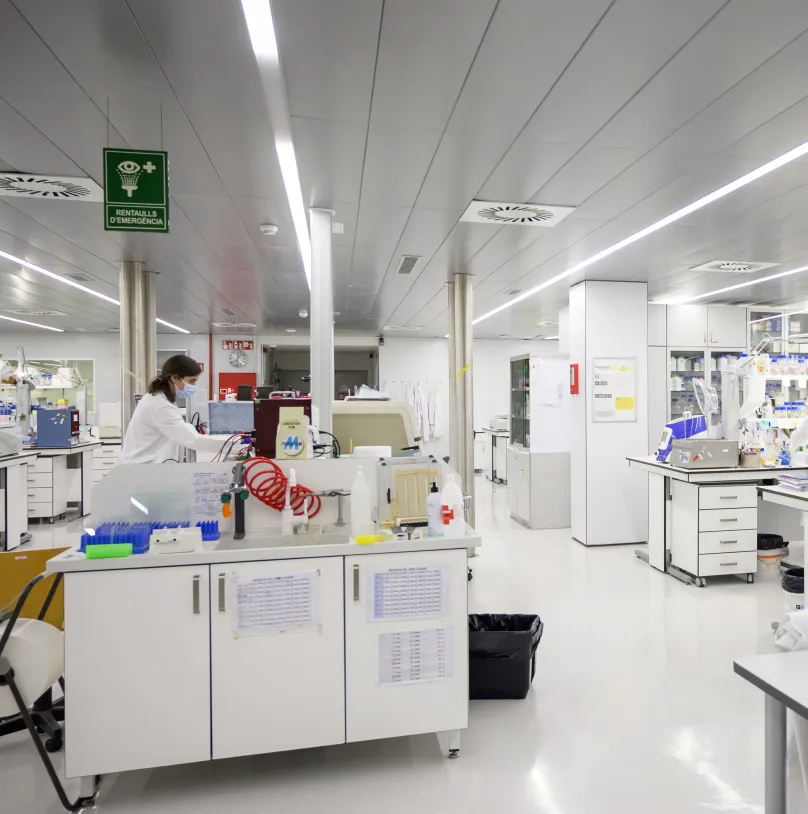
Facilities equipped with cutting-edge technology for teaching and research. Nursing students work in hands-on environments where they develop skills in essential areas such as microbiology, biochemistry, and other key disciplines in healthcare.
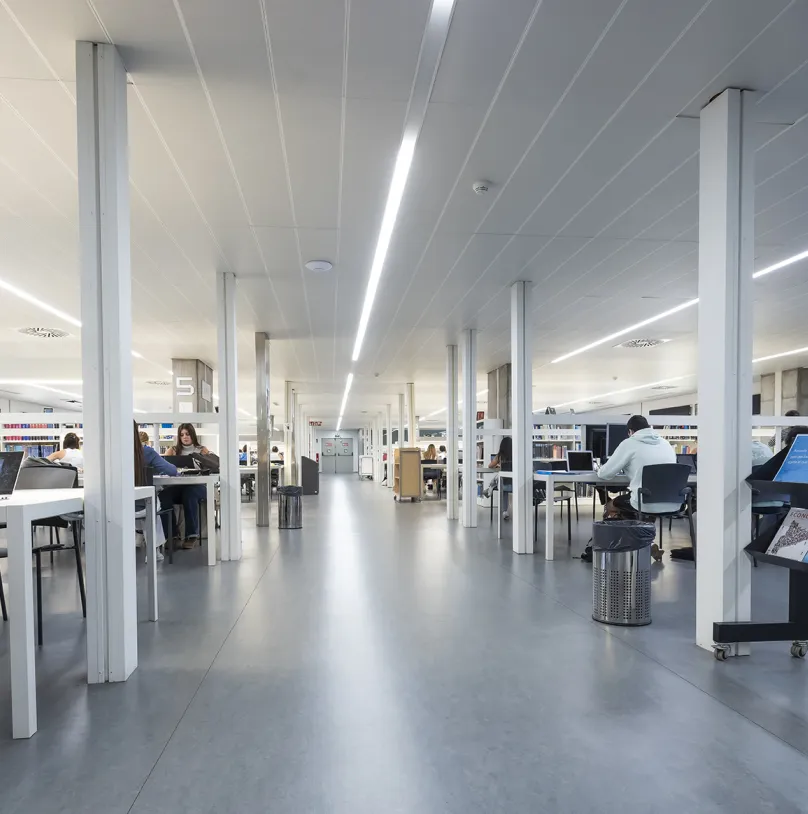
A modern and complete space with access to physical and digital resources. It offers updated and specialised materials that complement independent learning and support nursing students’ academic studies.
You will be qualified to become a full health care team member or develop competences in other set-tings:
In order to teach future professionals in the field of healthcare we have a teaching body that combines their teaching with exercising their profession in public and private hospitals and healthcare centres. They are also involved in important research activities both inside and outside the university. Direct contact with professional practice allows our professors and lecturers to transmit a comprehensive, multidisciplinary and human overview of the reality in the sector to students.
The University is organising open days for future university students who would like to know more about our institution and the programmes we offer.
Between June and September
To pre-register for undergraduate studies at UIC Barcelona, you will need to complete the application form available at the following link:
After submitting your application you are required to take an entrance exam on our Barcelona Campus. You may take it at any one of the available times.
Check out the documentation you need to be admitted to UIC Barcelona. We believe there are many ways to start your new life at university. Click on the following link for all necessary information:
If you have received an acceptance letter, all you need to do is pay 20% of the full cost of the first year. Once your enrolment is complete, you must pay the remaining 80% in one lump sum.
How can I access UIC Barcelona? Click on the following link for information on all possible routes.
UIC Barcelona offers various fellowships supported by both public institutes (MEC or AGUAR), as well as private UIC Barcelona funds.
For further information, please check with our admissions department:
Those seeking undergraduate degrees at UIC Barcelona may be, also, eligible for other different grants.
UIC Barcelona is committed to ensuring that nobody with a true aptitude and zest for learning should have to drop out of a degree for financial reasons. Student Services offers information and personalised assistance so that students can access these grants and financial aid.
125 places.
Consult the information about the price in the "Prices, grants and financial aid" section that you will find on this same page.
No, all teaching materials are available on the University’s digital platform and in the library.
You can find out all the various options including grants, discounts, and fee waivers, as well as the terms and conditions for loans on our website. If you have an average mark of 8 or higher in your first year of upper secondary education or a 9 or higher in your first year of Higher Vocational Education and Training (CFGS), and you are currently in your second year, you are eligible for a Grant for Academic Excellence, which entitles you to an 80% discount every year of study.
Class hours are from 8.00 a.m. to 2.00 p.m. and there may be some afternoon classes for joint activities with medical students.
Work placement schedule: mornings, afternoons or nights in highly technical services.
Hospital placements begin in the second semester of the first year with the aim of immersing the student in a clinical environment from the beginning. Practical work experience is at the centre of student training.
The University also has its own Comprehensive Centre for Advanced Simulation (CISA) of about 1,000 m2, in which first year students complete practical classes in small groups.
Yes, we try to ensure that students get as much experience as possible in all clinical units and specialisations.
You will deal with all patient profiles, from children to adults of all ages.
Yes.
Yes.
If you have studied a CFGS in: Imaging for Diagnosis, Pathological Anatomy and Cytology, Clinical and Biomedical Laboratory or Radiotherapy, you will have 12 credits recognised automatically, corresponding to the subjects of Structure and Function of the Human Body I and II.
If you have begun but not finished your studies or have requested an academic record transfer, you may request that your previous academic merits be recognised once you have been accepted. In order to do so, you must provide a series of documents within the established timeframe. If you have worked as a nursing assistant in the last year and a half for more than 6 consecutive months, this practical experience can be recognised as an initial practical placement of the first year.
In order to do so, you must provide a series of documents before the established date.
Yes, to gain admission into the Bachelor’s Degree in Nursing, you must take the entrance exams regardless of your situation.
As this is a private university, there is no cut-off requirement. Admission into the bachelor’s degree will depend on the outcome of the relevant entrance exams from our university.
Subject matter corresponding to the 1st year of the baccalaureate:
The tests will be as follows:
You can ask for a specific date; however you must wait from confirmation from the Information and Admissions Service who will confirm the exam dates via email once they have looked over your documentation.
We do not provide past papers from previous years.
Yes.
To obtain the bachelor’s degree, the student must present a certificate that certifies a level B2 in a foreign language (as with all bachelor’s degrees).
They start at 9.00 a.m. and last about an hour and a half.
The results will be sent to you by e-mail approximately 15 working days after the exams.
No, you can only attend one sitting per academic year.
You will receive a letter of admission containing information about the next steps to take in order to reserve a place on the course, which corresponds to 20% of the fee for first year. The remaining 80% will be paid during the registration period (40% in July, 20% in January and 20% in March).
The reservation fee will only be fully reimbursed in event you do not pass your upper secondary studies or the Spanish university entrance exams (PAU).
This clause is laid out in the general terms and conditions.
As a student in this degree programme, you may complete part of your degree or a work experience placement abroad and receive academic recognition.
Spend a semester or a full academic year at one of your Faculty’s partner universities or find a company abroad to do an internship. You may also:
For information about everything you need to do before, during and after your mobility stay, check out the "Study abroad" section and download all the documentation specific to your Faculty:
If you are studying at another Spanish or foreign university, you can come to UIC Barcelona to study temporarily for one semester or a full academic year.
To find out all the steps to follow before, during and after mobility, consult the “Study at UIC Barcelona” section.
If you would like to find out more about the specific incoming mobility criteria for this programme, contact the Department of International Relations:
The Alumni Ambassadors are volunteer alumni who will explain their experience at UIC Barcelona to you. With them you will be able to resolve any doubts that may arise about the chosen program, the University and your experience as a student.
Don't miss this magnificent opportunity to learn first-hand what it means to do a program at UIC Barcelona and the value it brings you in the development of your career. If you have any specific questions about the admission process, scholarships, visas or financial aid, you can contact directly admisiones@uic.es.