

Lifelong Learning Master's Degree in Bioinformatics & AI for Healthcare


Home
- Type of programme
- Lifelong Learning Master's Degree
- Campus
- Campus Sant Cugat
- Duration
- From October to July
- Credits
- 60 ECTS
- Schedule
- Monday to Friday, from 16.00 to 20.00
- Language
- 100% in English
- Places
- 30
- Modality
- On site
Reasons to study this master’s degree
- Unique programme
It includes Bioinformatics and artificial intelligence applied to healthcare.
- Booming sector
High demand for hybrid profiles with scientific and technical training.
- Comprehensive training
Technical education in bioinformatics and AI, alongside practical experience in industrial innovation.
- 100% in English
You will live alongside students of different nationalities, thus promoting intercultural exchange.
- 1 academic year
From October to July, with a total of 60 ECTS.
- Work placements included
The programme includes 550 hours of in-person internships in leading research groups and research centres at renowned universities.
Hear it from them
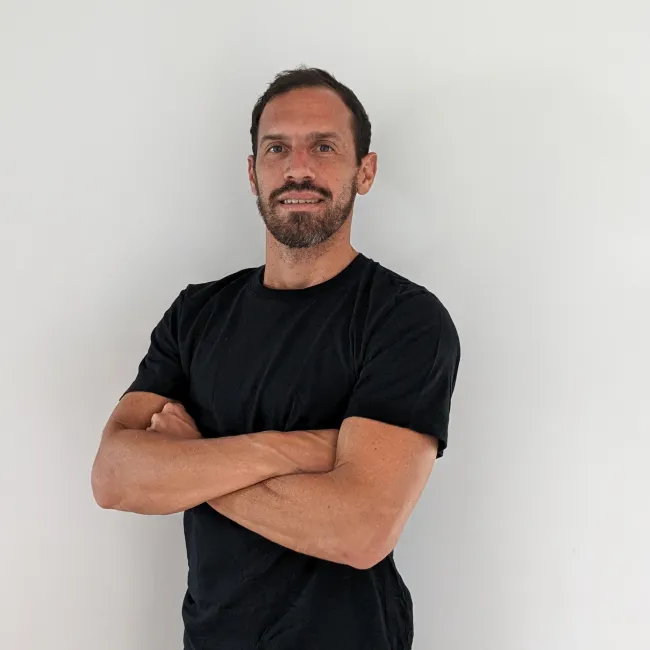
With a strong background in both computer science and biological research, I can confidently say that this programme is the essential bridge between complex biological and clinical data and the future of healthcare. Beyond computational genomics and bioinformatics, you will master cutting-edge AI, including machine learning, deep learning and large language models, grounded in logic and programming techniques.
Our mission is clear: to train the hybrid experts needed to transform massive datasets into practical solutions for diagnosis, prognosis and therapeutic development. You will learn from a multidisciplinary team of scientists, AI leaders and biomedical specialists, ensuring your training is both rigorous and immediately applicable.
This master’s degree responds to the growing demand for innovative profiles in hospitals, research centres and technology companies. We invite you to become one of the driving forces behind a more agile, ethical and data-driven healthcare system.
Presentation
Bioinformatics and artificial intelligence are transforming the healthcare sector, driving strong demand for professionals with expertise in biology, computer science and data analysis. This hybrid profile is key to advancing innovation in precision medicine, digital health and biomedical research.
This master’s degree will equip you to apply AI in the development of solutions that enhance healthcare delivery and knowledge management in health systems.
Why study a master’s in bioinformatics and AI applied to healthcare?
- High demand and shortage of specialised talent: The digital transformation of healthcare has created an urgent need for professionals capable of analysing and managing large volumes of biomedical data, a profile that remains scarce.
- Sustained growth in the biotech and healthcare sectors: Industries such as pharmaceuticals, biotechnology and digital health are expanding rapidly and require experts in AI and bioinformatics to lead innovation and development projects.
- Direct impact on health improvement and research: AI applications in medicine are driving progress in diagnostics, personalised treatment and biomedical research, contributing to more efficient and accurate healthcare.
- Wide range of career opportunities: From hospitals and research centres to digital health startups, consultancies and regulatory agencies, hybrid profiles in bioinformatics and AI are in demand across diverse professional settings.
- Interdisciplinary and up-to-date training: This master’s programme integrates biology, programming, data analysis and regulatory knowledge, preparing professionals to collaborate effectively in multidisciplinary biomedical teams.
Objectives
- Understand the current context and challenges of bioinformatics and AI in healthcare.
- Acquire practical skills to design and carry out biomedical data analysis projects in various professional environments.
- Develop critical thinking and evaluation skills for biomedical research and innovation workflows.
- Learn the data-driven healthcare value chain, from data generation and management to clinical and industrial application.
- Master the use and analysis of large biomedical datasets, combining technical, scientific and ethical knowledge to drive innovative AI-based solutions.
Who is it aimed at?
The master’s is designed for recent graduates and early-career professionals seeking to enter the emerging field of bioinformatics and AI in healthcare, a rapidly growing sector with strong scientific and professional prospects.
It is particularly suited to graduates in health sciences, biology, biotechnology, bioinformatics, biomedical engineering, computer science or related disciplines who are looking for interdisciplinary training that combines biology, technology and data analysis.
It is also aimed at active professionals in the healthcare or technology sectors who wish to specialise or redirect their careers towards biomedical innovation, digital tool development or data-driven health research.
The programme offers a solid theoretical and practical foundation, preparing graduates to join research teams, pharmaceutical and biotech companies, or digital health startups, contributing to high-impact projects in personalised medicine, clinical data analysis and technological development.
Skills
- Interdisciplinary understanding and critical thinking
Students gain a comprehensive view of the digital health sector, developing an understanding of the scientific, technological and ethical foundations underpinning bioinformatics and artificial intelligence. The programme fosters a critical mindset towards the challenges and opportunities in the field. - Practical application and real-world problem solving
The programme prepares professionals to apply their knowledge in academic, clinical and corporate settings, designing and implementing biomedical data analysis projects with scientific rigour and practical relevance. - Effective communication and teamwork
Students develop the ability to communicate complex ideas clearly and appropriately to diverse audiences – from specialists to decision-makers – while cultivating collaborative skills essential for working in multidisciplinary teams within the health innovation ecosystem. - Leadership, project management and strategic vision
Participants learn to plan, coordinate and lead bioinformatics and AI projects, integrating technical, clinical and managerial dimensions with a strategic approach focused on innovation, feasibility and sustainability. - Lifelong learning and professional adaptability
The master’s programme promotes autonomy, adaptability and continuous learning, equipping graduates to evolve professionally in a fast-changing sector with high demand for specialised talent.
Curriculum
Internship
Strong practical focus
The programme combines work on applied case studies during the first semester with a period of professional internships in partner biomedical companies during the second semester.
Key features:
- External internships concentrated in the second semester, without overlapping with theoretical classes, which are concentrated in the first term
- 550 on-site hours
- Internship schedule during regular working hours (approximately 9 a.m. to 6 p.m.)
- Possibility of signing an internship agreement with other institutions in your home country



Professional Career
This programme prepares professionals to work in the analysis and interpretation of complex biomedical data, the development of AI-based tools and innovation in digital health. Graduates will be equipped to join hospitals, research centres, biotech companies or digital health startups, contributing to projects in personalised medicine, assisted diagnosis and intelligent clinical data management. They will also be prepared to lead interdisciplinary initiatives, drive digital transformation in healthcare or pursue further academic study through specialised doctoral programmes.
- Biomedical data analyst: Specialist in the integration and analysis of genomic, clinical or imaging data in hospitals, research centres or health sector companies.
- AI and algorithm developer: Focused on designing tools and models for diagnostics, personalised medicine or public health.
- Clinical bioinformatics specialist: Providing technical and scientific support to medical or research teams requiring advanced interpretation of biomedical data.
- Digital health innovation consultant or manager: Professional capable of bridging biology, computing and project management in multidisciplinary environments.
- Health data engineer: Responsible for automating data analysis, management and visualisation processes in hospitals, laboratories or technology companies.
- Researcher in bioinformatics or AI applied to biomedicine: Prepared to join academic research groups or continue into doctoral studies.
- Entrepreneur in biotechnology or digital health: Equipped to create or lead technology-based startups focused on AI, computational biotechnology or biomedical data analysis.
Teaching team
Our teaching and research team
- a - f
- g - m
- n - r
- s - v
- w - z


Admission process
Admission process for master's and postgraduate programmes
-
Request information
-
Application for admission
- Delivery of documentation
- Validation of documentation
Assessment of candidate
Result of admission process
- Admission
- On hold
- No admission
Deposit paid
Enrolment
Between July and September
- Tuition paid
Welcome!
You are now part of UIC Barcelona
Admission criteria
Direct access to the master’s programme requires a university degree in one of the areas listed under the “Target audience” section.
If the number of applications exceeds the available places, a merit-based selection process will be applied. This process evaluates the applicant’s academic record, professional background and motivation.
The selection process consists of three phases:
- Evaluation of academic record and submitted credentials.
Each applicant’s academic and professional background will be assessed using a points-based system with the following weighting:- Undergraduate academic record: 25%
- Personal presentation video (maximum 3 minutes): 25%
- Relevant additional training: 15%
- Professional experience in related fields: 15%
- Research experience: 10%
- Letters of recommendation (up to two): 10%
- Personal interview.
Shortlisted candidates will be invited to attend an interview, either in person or via videoconference. The interview will assess the following:- Professional interest and understanding of the master’s field
- Motivation and learning expectations
- Alignment between future goals and the training offered
- Final decision.
Admission will be determined by combining the score obtained for academic and professional merits with the qualitative assessment of the interview. This ensures an objective selection process aligned with the profile required for the programme.
If the number of applications exceeds the number of places available, a merit-based selection process will be carried out. This process evaluates the academic and professional background of all candidates, with the aim of applying objective criteria to determine which applicants will ultimately be admitted to the programme.
In addition to this academic and professional assessment, shortlisted candidates will be invited to a personal interview to ensure that their training expectations are aligned with the programme’s academic content. Interviews may be conducted either in person or via videoconference.
Admission body
If you have decided to study this master’s programme, follow the steps below to complete the admission process. We advise you not to delay as places are limited.
- 1rst: Online Admission Application
- 2nd: Send the following documentation (*)
Students who have official Spanish university degree
- An attested photocopy of your degree certificate, or an attested photocopy of the receipt for payment of the fees required to issue the degree certificate.
- An attested photocopy of your academic transcripts from past university studies.
Students who have official university degree form a foreign university
- A legalised original photocopy of your degree certificate.
- A legalised original photocopy of your academic transcripts from past university studies.
In all cases:
- One passport-sized photo.
- One photocopy of your national ID card (DNI) or passport.
- An up-to-date CV.
- A motivation letter.
If the documents are in a language other than Spanish, please submit a sworn Spanish translation of your university degree certificate and academic transcript.
- 3rd: Interview
Interview with the master’s degree management or coordinator.
Once accepted, students can start the process of booking places and registration.
Reservation and registration
Candidates who have been accepted into a master's or postgraduate degree programme will receive an acceptance letter that is contingent on payment of the reservation fee.
- Place reservation is made effective by payment of the amount specified for the respective programme, within ten business days of receipt of the admission acceptance letter.
- Once a place has been officially reserved, if a student fails to meet, according to state or autonomous community legislation in force at all times, the requirements for admission to the degree course; does not hold the required qualification required; or students are not enrolled due shortage insufficient registration, UIC will reimburse the full amount of the reservation fee.
- If the student voluntarily withdraws from the course for any reason, UIC Barcelona will retain the reservation fee in its entirety with no obligation to reimburse the amount, as compensation for any damages or losses incurred.
- It will be understood that non-payment of the reservation fee to mean the student rejects their place, in which case UIC Barcelona to cancel and leave without effect the request submitted for a place.
Prices, grants and financial aid
Price
Grants
UIC Barcelona offers various fellowships supported by both public institutes (MEC or AGUAR), as well as private UIC Barcelona funds.
For further information, please check with our admissions department:
Grants offered by UIC Barcelona for master's degrees and postgraduate programmes
Other grants
Those pursuing master's degrees or postgraduate programmes studies at UIC Barcelona are also eligible for other scholarships.
Financing
In order to make tuition fee payments easier for students, UIC Barcelona offers various financing options through its partner banks.
Payment facilities
UIC Barcelona offers different payment options.