University Master's Degree in Bioengineering for Human Health


Home
- Type of programme
- Official masters
- Campus
- Campus Sant Cugat
- Duration
- 2 semesters
- Credits
- 60 ECTS
- Schedule
- Monday to Friday
- Language
- English
- Places
- 15
- Modality
- On site
Discover the Master's where engineering, innovation and medicine come together
The University Master's Degree in Bioengineering for Human Health at UIC Barcelona is designed to train future leaders in technological innovation applied to the field of healthcare. With a multidisciplinary and patient-centred approach, this programme combines advanced engineering and health sciences knowledge with intensive hands-on training in key areas such as biomaterials, nanotechnology, artificial intelligence and regenerative medicine.
The master’s degree offers a solid foundation in research and entrepreneurship, preparing you to address real challenges in hospitals, research centres and industry. It also includes international mobility opportunities to carry out the Final Master’s Degree Project in collaboration with prestigious institutions, thereby strengthening your profile.
Delivered in a cutting-edge clinical and academic environment and supported by the Bioengineering Institute of Technology (BIT), this master's degree positions you as a highly sought-after professional capable of transforming the future of healthcare through technology.
Reasons to study this Master's programme
- Programme focused on technological innovation in health
The master's degree is set apart by its unique focus on the application of advanced technologies—such as big data, artificial intelligence, nanotechnology and new biomaterials—to solve the most pressing challenges in hospitals, healthcare centres and industry. Training designed for those who aspire to lead the technological evolution in healthcare.
- Comprehensive, multidisciplinary and applied training
The programme combines advanced knowledge of engineering and health sciences with a solid practical training. Through real projects, laboratory practice and in silico studies, you will acquire the necessary skills to tackle everything from the design of medical devices to strategies in regenerative medicine. This methodology will prepare you to take on challenges in demanding professional environments.
- Research with global impact
As part of the Bioengineering Institute of Technology (BIT), you will have access to a leading bioengineering research ecosystem, with innovative projects in biomaterials and biodevices. The programme encourages your active participation in interdisciplinary studies, challenging you to develop technological solutions that improve the quality of life for patients around the world.
- Preparation for industry and research
This master’s degree not only trains you in technical areas, but also trains you in business management, health regulation and entrepreneurship. These competences position you to contribute to the technology and pharmaceutical industry, in research centres or in technology transfer projects.
- International mobility and global vision
The master's degree includes national and international mobility options to carry out the Final Master's Degree Project (TFM) in collaboration with prestigious universities and research centres. In addition, the international nature of the programme ensures that you work with global cases, strengthening your professional profile in a highly competitive market.
- Interdisciplinary teaching with a focus on the patient
With a teaching staff made up of specialists in engineering, health and applied sciences, you will receive an education that combines academic excellence and practical vision. This approach, focused on the real needs of healthcare staff and patients, ensures that your skills have a direct impact on improving human wellbeing.
University Master's Degree in Bioengineering for Human Health
Industry Partners




Find out the dates of the upcoming information sessions
Get all your questions answered and discover if this Master's is right for you. Join our next information session and learn about the programme from its directors and faculty.

Presentation
The bioengineering sector is experiencing an unprecedented boom as demand for advanced technological solutions in the field of healthcare grows. Current trends revolve around the use of disruptive technologies, such as artificial intelligence, big data and nanotechnology; the development of personalised therapies that enable the design of specific solutions for each patient; and progress in regenerative medicine, with the creation of new biomaterials and medical devices that improve the quality of life of patients and optimise hospital processes.
The master's degree addresses all these issues through an innovative and highly specialised teaching plan, combining advanced knowledge in engineering and biology with a practical approach. By solving real cases and having direct access to state-of-the-art laboratories, students will acquire the necessary skills to lead research and development projects in the hospital, industrial and academic fields.
Objective
The aim of the master’s degree is to train professionals in the field of bioengineering applied to human health, combining advanced knowledge in medical technologies, research and management, with an ethical and practical approach to solve the current challenges of the healthcare sector.
- Mastery of advanced medical technologies
Acquire expertise in medical devices, health information technologies, biomaterials and regenerative medicine for application in clinical and hospital settings. - Designing technological strategies in healthcare
Develop skills to implement solutions based on emerging technologies, such as big data analytics, medical imaging and advanced digital tools, adapting to the rapid evolution of modern healthcare. - Preparation for applied research
Train students to take part in research projects in hospitals or specialised centres, providing a technical and multidisciplinary approach. - Management and entrepreneurship in the healthcare sector
Provide skills in business management, health regulation and clinical trial development, with direct applications in hospitals, the biomedical industry and knowledge transfer. - Effective communication in medical environments
Train students to interact with multidisciplinary medical teams, proposing innovative solutions to specific hospital problems. - Ethics and professional responsibility
Guarantee a thorough knowledge of the bioethical principles inherent to the profession, promoting responsible and sustainable decision-making in the field of healthcare.
Applicant profile
The Master's Degree in Bioengineering for Human Health is designed for graduates in Bioengineering, Biomedical Engineering, Industrial Engineering, Materials Engineering, or Chemical Engineering, Biomedical Sciences, Biomedicine or equivalent degrees who wish to specialize in advanced technologies for the healthcare sector. It offers practical and interdisciplinary training focused on leading innovation projects in hospitals, research centers, or biomedical companies, with an emphasis on personalized and sustainable solutions to improve quality of life.
Academic Accreditation
Máster Universitario en Bioingeniería para la Salud Humana / Master in Bioengineering for Human Health por la Universitat Internacional de Catalunya
Curriculum
Facilities
The Master's Degree and Postgraduate degrees in Bioengineering is taught at the Bioengineering Institute of Technology (BIT), which features over 700 m² of dedicated laboratories equipped with cutting-edge technology. Located on the Sant Cugat campus, within the Hospital General de Catalunya, this environment enables constant hands-on practice and direct contact with clinical settings and other disciplines such as Medicine, Dentistry, Physiotherapy, and Nursing — creating unique synergies for a truly multidisciplinary learning experience.
-
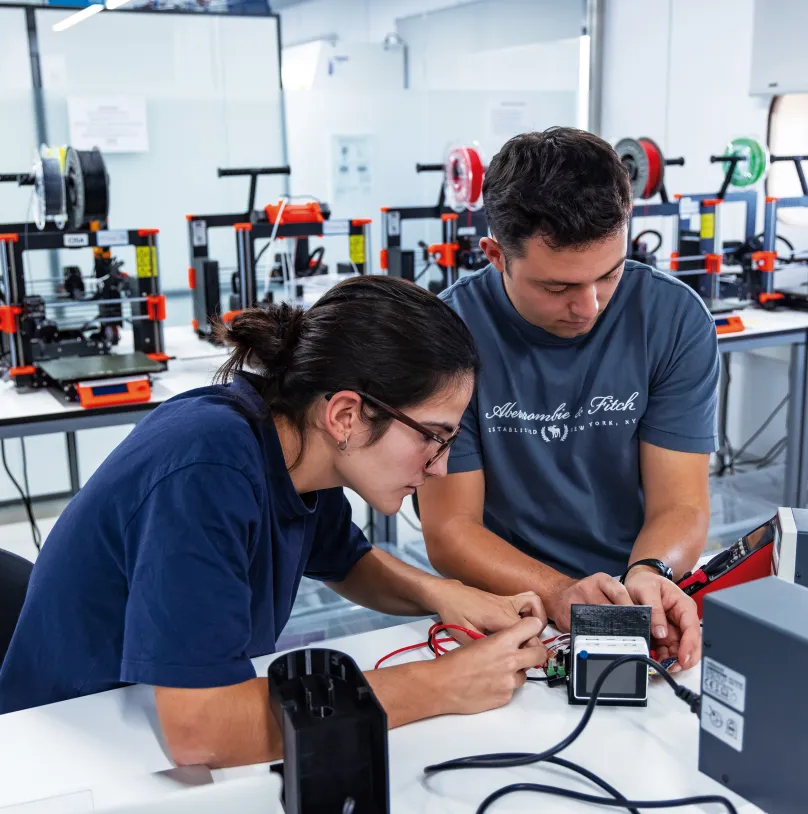 Electronics and 3D Printing Laboratory
Equipped with the latest-generation 3D printers and materials to integrate sensors into printed parts, ideal for prototyping and biomedical development.
-
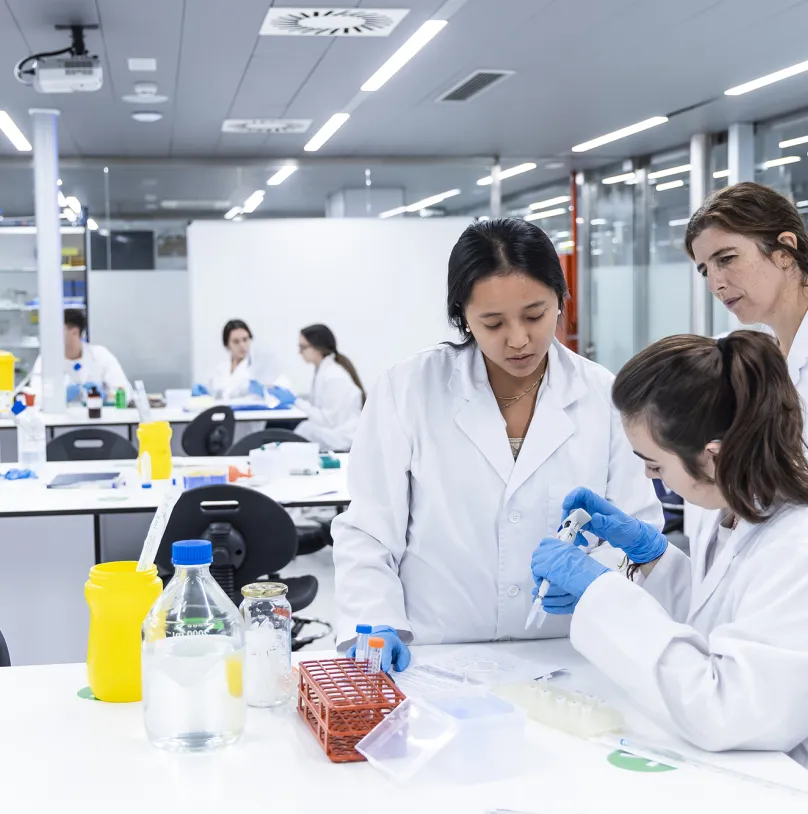 Practical Training Laboratory
A space with biosafety cabinets, microscopes, and centrifuges for applying knowledge in tissue engineering, nanotechnology, and biomaterials.
-
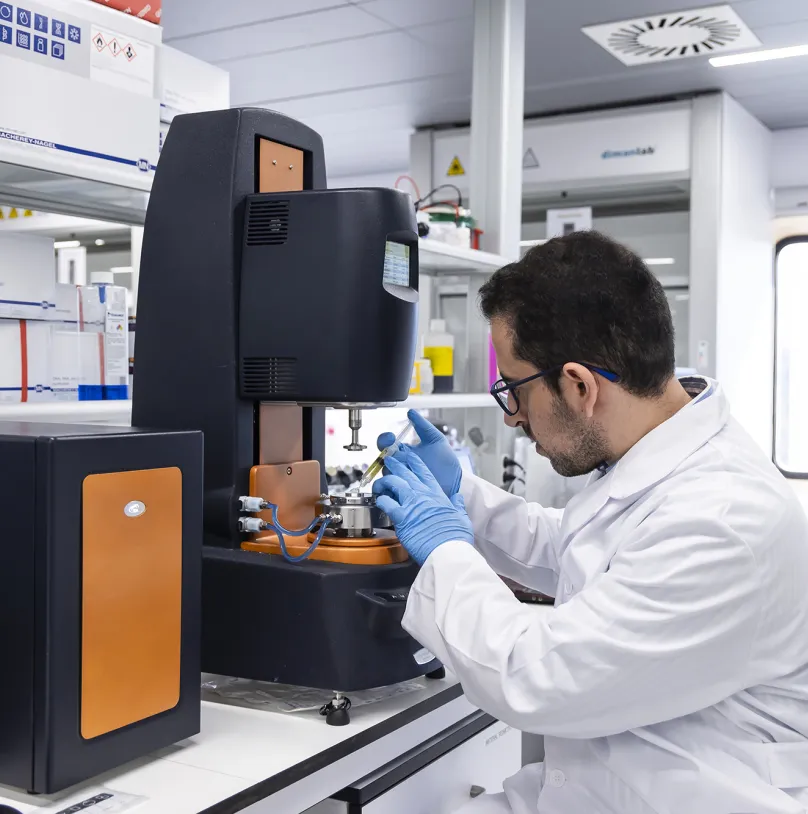 Research Laboratory
Outfitted with advanced equipment such as a rheometer, Zetasizer, and PCR cabinets, allowing students to take part in research projects alongside academic staff.
-
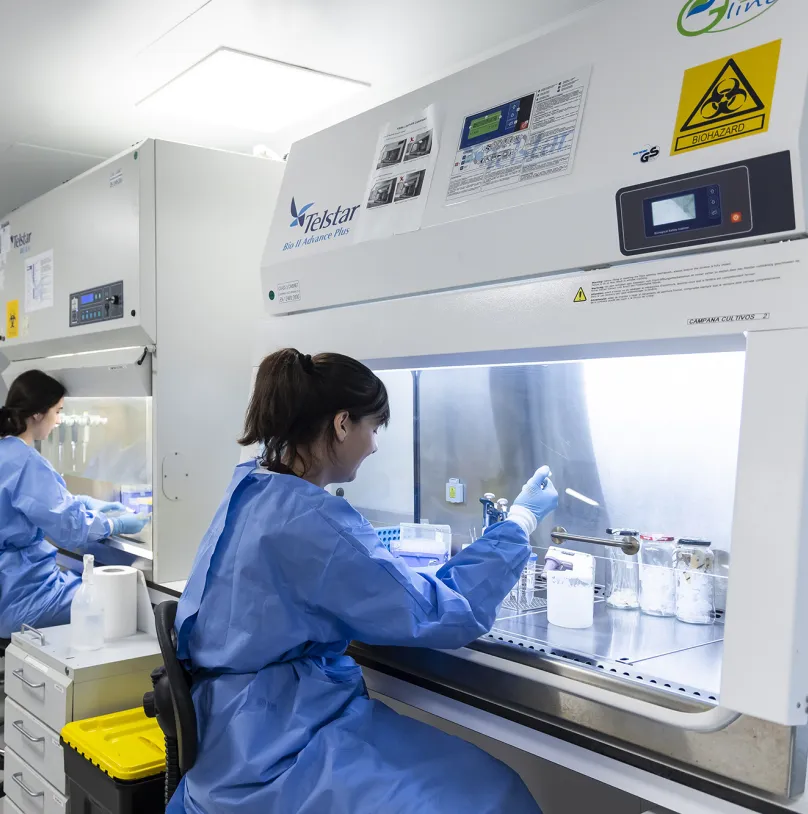 Cell Culture Room
A dedicated facility for cell culture, stem cells, and 3D bioprinting, with controlled conditions for monitoring and supporting cell growth.
-
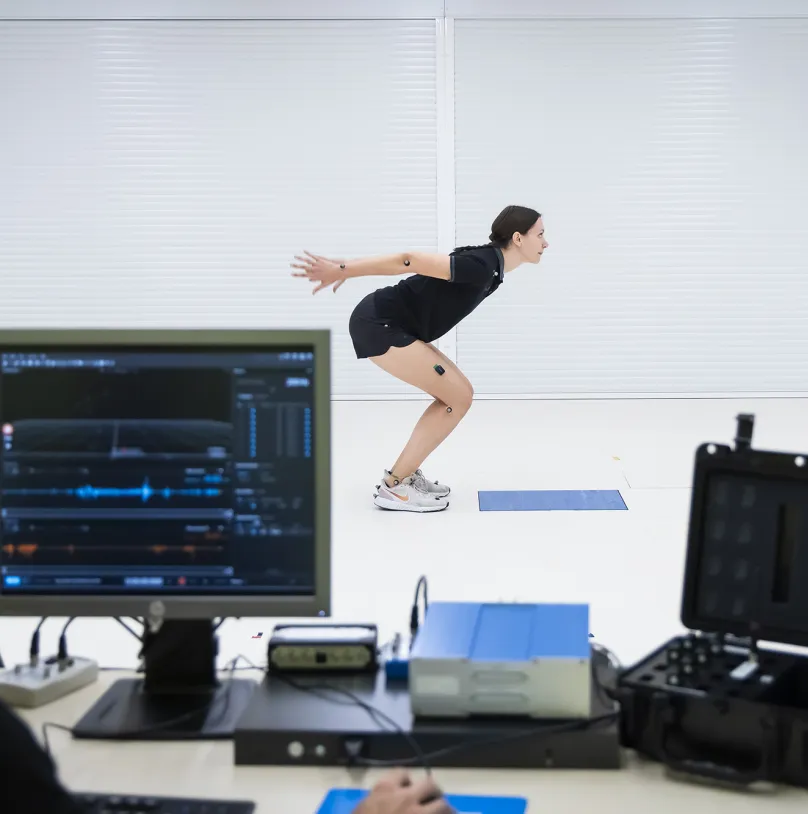 Physioengineering Laboratory
A space shared with the Physiotherapy department, equipped with an optical motion capture system, where students collaborate on multidisciplinary projects.
-
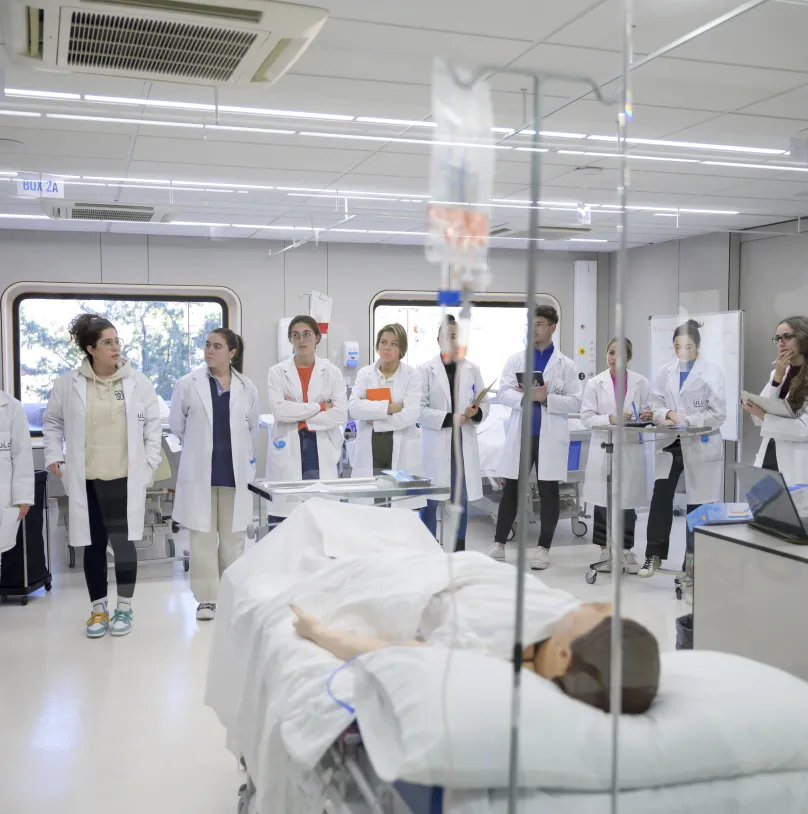 CISA (Advanced Simulation Centre)
A 1,000 m² simulation centre with operating theatres, intensive care units, and training rooms for rehearsing, validating prototypes, and working in simulated clinical environments.
Professional Career
The Master's Degree in Bioengineering for Human Health opens up a wide range of professional opportunities, especially designed for graduates in engineering areas who seek to apply their technical training to the field of healthcare. Graduates will be able to develop their career in:
- Design and innovation of biomedical devices
Work on advanced prosthetics, high-precision diagnostic systems and customised medical devices that respond to the specific needs of patients and hospitals. - Development of biomaterials and nanotechnology
Participate in research projects and production of new materials for tissue regeneration, manufacture of artificial organs or antibacterial coatings for clinical applications. - Hospital Process Optimization
Implement technological solutions such as advanced sensors, robotics or big data systems to improve efficiency and sustainability in the management of medical resources. - Interdisciplinary research in healthcare
Be part of research teams in universities, biomedical institutes or laboratories, developing innovative technologies applied to cell biology, regenerative medicine or artificial intelligence used for healthcare. - Technical and regulatory consultancy
Advise companies and health organisations on how to adapt products and processes to international standards, guaranteeing quality and safety in technological developments. - Entrepreneurship and leadership in bioengineering
Design your own business project in the biomedical sector, leading startups that offer disruptive solutions in areas such as 3D printing, portable monitoring devices or innovative therapies.
This master’s degree prepares engineers to excel in a dynamic and constantly evolving environment, combining their technical profile with a transformative vision of social impact.
Teaching team
Our teaching and research team
- a - f
- g - m
- n - r
- s - v
- w - z

Information sessions
Attend the next Informative Session
The University is organising open days for future university students who would like to know more about our institution and the programmes we offer.
Admission process
Admission Requirements
All candidates who meet the general access requirements for the degree and have prior education and a university qualification may apply. The program is aimed at graduates, holders of a licentiate degree, or doctors in Bioengineering, Biomedical Engineering, Industrial Engineering, Materials Engineering, and Chemical Engineering.
Admissions Process
If you have decided to pursue the master’s degree, follow the steps below to complete your admission process. We recommend applying as soon as possible, as places are limited.
- Online Admission Application
- Submit the application form online.
- Submit the Required Documentation (*)**
- Interview
An admission interview will be considered once the documents have been validated and according to the student's profile.
Once admitted, you can begin the process of reserving your place and enrolling.
Documentation
Students with an official Spanish university degree
- Certified photocopy of the university degree or the document certifying the degree, or certified photocopy of the receipt for payment of the fees for issuing the degree.
- Certified photocopy of the academic certificate of university studies completed.
Students with an official foreign university degree
- Original officially certified photocopy of the university degree.
- Original officially certified photocopy of the academic certificate showing the grades in the university studies completed.
For every application:
- A passport-size photograph.
- Photocopy of the ID or passport.
- Updated CV.
- Letter of motivation.
*If the language of the submitted documentation is not Spanish, an original sworn translation into Spanish of the university degree and the academic transcript must be provided.
Admission criteria
In accordance with the provisions of Article 16 of RD 861/2010, candidates must hold an official Spanish university degree, bachelor's degree, diploma, engineering or architecture qualification issued by a higher education institution belonging to another member state of the European Higher Education Area, in order to access master's degree programme.
The admission tests consist of a weighted assessment of the candidate’s professional and research record.
Once the admission process has been concluded, the Information and Admissions Service in charge of managing the tests will inform the candidates of their results.
Reserving a place and enrolment
Candidates accepted into a master’s or postgraduate program will receive an admission letter conditional upon payment of a reservation fee.
The reservation is confirmed by depositing the stipulated amount within 15 working days of receiving the admission notification.
If, after reserving a place, the student does not meet the admission requirements under applicable state or regional legislation, does not possess the necessary qualifications, or if the program does not proceed due to insufficient enrollment, UIC Barcelona will refund the full amount of the reservation fee.
If the student voluntarily withdraws from the program for any reason, UIC Barcelona will retain the reservation fee in full as compensation for any damages or losses incurred.
Failure to pay the reservation fee will be interpreted as a rejection of the place, authorizing UIC Barcelona to cancel the application.
Enrollment is formalized in July, once all necessary documents have been submitted.
Prices, grants and financial aid
Price
Grants
UIC Barcelona offers various fellowships supported by both public institutes (MEC or AGUAR), as well as private UIC Barcelona funds.
For further information, please check with our admissions department:
Grants offered by UIC Barcelona for master's degrees and postgraduate programmes
Other grants
Those pursuing master's degrees or postgraduate programmes studies at UIC Barcelona are also eligible for other scholarships.
Financing
In order to make tuition fee payments easier for students, UIC Barcelona offers various financing options through its partner banks.
Payment facilities
UIC Barcelona offers different payment options.