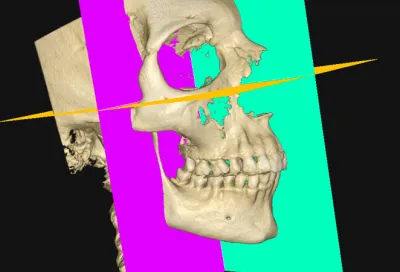
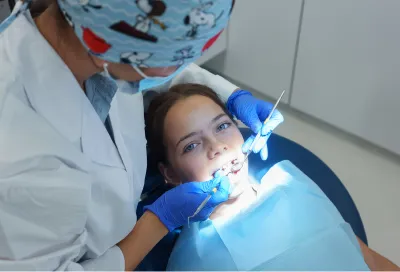
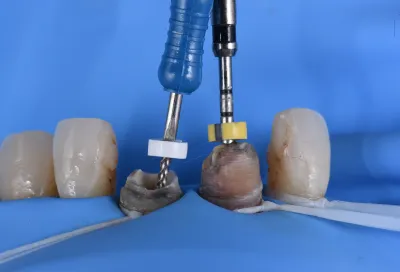
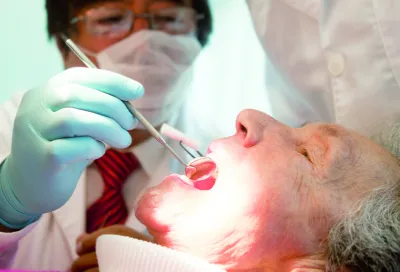
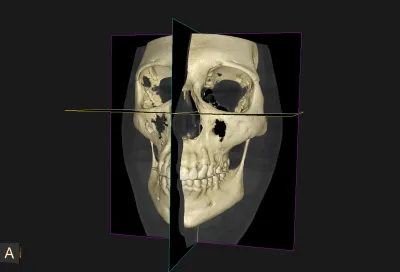
In the various fields of action of the Specialist in Oral and Maxillofacial Radiology, competences include:
In relation to the previous considerations about image exams
To be undertaken by professionals whose standard criteria is to protect their patients according to the international regulation for the reduction of the radiation doses to a reasonable minimum in order to obtain diagnostic benefits (ALARA criteria).
In order for your professional work in Oral and Maxillofacial Radiology to always consider the cost-benefit relationship between the characteristics and quantity of the exams that are necessary and most suitable for each particular case then thisneeds to be considered. The reason for this is so that your activities can be undertaken in the way that causes the least damage when using ionising radiation and also with a view to the most suitable level of resolution of clinical concerns for which each patient will have been informed about the respective image examinations that will be used.
Given the continuous progress on the scientific and technological progress in Oral and Maxillofacial Radiology places a critical attitude and permanently updates information which allows them to suitably adopt the concepts which constitute a benefit to this discipline in dentistry in order to put them into practice, the reason why continuing academic education is its natural characteristic.
The image examinations themselves
Students must acquires the skills to correctly indicate conventional and highly complex imagine examinations according to the characteristics of each clinical profile, with one of them being a permanent advisor for general dentistry, specialist dentistry and, sometimes, also a medical surgeon, in order to suitably complement the information coming from clinical discoveries in the oral and maxillofacial fields.
In this way Oral and Maxillofacial Radiology contributes to the various stages involving the diagnosis, control and the treatment of local pathologies, while generating information which complements clinical discoveries and allows students to estimate the prognosis for existing pathologies.
Students must be trained to undertake conventional radiographic exams, as well as ensure that they are critically and correctly advised when undertaking the most complex exams, with the aim of always using the available technology efficiently on the private and public network of image provider services.
This professional has the most authority to interpret the images obtained from these exams both in terms of pathologies related to the motive that led to the exam request, and in terms of the discoveries made thereby, always based on the aim of returning to or preserving good oral health. The healthcare team will provide this as a comprehensive service to their patients.
In terms of their tasks in the healthcare team
In order to do this these professionals must be able to work in a team, whenever Oral and Maxillofacial Radiology activities are in essence an activity involving advice and are complementary to clinical activity, whatever the dental specialisation and eventually the medical specialisation is, that requires their services.
Likewise, the image discoveries can be correlated with the clinical and epidemiological realities of each individual in particular and of the entire population in general and, since he or she also knows the national systems of healthcare planning in the area of dentistry, can be undertaken both in the public and the private sector.
Oral and Maxillofacial Radiology has the ability to guide or contribute to the scientific research that is carried out in relation to the particular work of the specialisation or for which the specialisation provides support. It likewise has the potential to make the activities known and to equip suitably accredited assistants to undertake tasks to support the field of this specialisation.
At the same time, Oral and Maxillofacial Radiology has the required competences to provide their opinions on legal or expert issues with back-up when the pertinent authorities consider it to be necessary.
In terms of responsibility
Further to all of the above, the specialist is responsible for the procedures and results of the work towards the specialisation they are responsible for administrating. At the same time they will be responsible for raising awareness among the corresponding administrative authorities about any eventual irregularities which they will become involved in during their work or which will be present in the clinical guidelines which regulate their activity in the public and private healthcare networks which offer image diagnosis services.