The Faculty of Dentistry seeks, in accordance with the general objective of Universitat Internacional de Catalunya, to provide a service to society in its educational mission by carrying out teaching and scientific research tasks, aimed at the professional training and scientific, cultural and human education of its students, as well as the development of activities to promote culture.
The creation of a Lifelong Learning Master's Degree in Diagnostic Imaging and Oral and Maxillofacial Radiology responds to the growing need to train highly qualified professionals in the use of advanced imaging techniques for the diagnosis and treatment of pathologies in the oral and maxillofacial region. This specialisation is essential to address current challenges in the dental field and ensure quality care for patients.
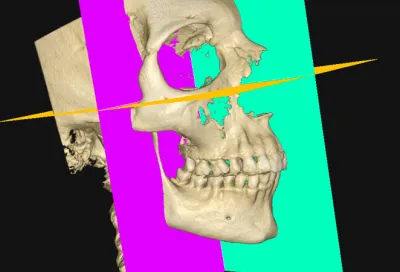
In recent decades, oral and maxillofacial radiology has experienced significant advances, incorporating technologies such as conical beam computed tomography (CBCT), magnetic resonance imaging and ultrasound. These tools provide high-resolution images that enable a detailed assessment of anatomical structures, leading to more accurate diagnoses and more effective treatment plans. However, the correct use of these technologies requires specialist training, from understanding the physical principles to clinical interpretation of the images obtained.
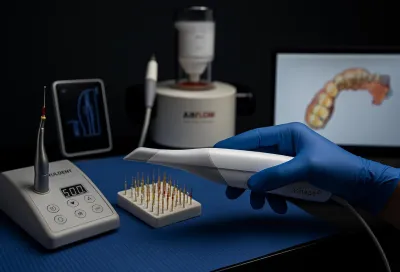
Digital dentistry, with the widespread use of scanners, is increasingly advancing hand in hand with radiology in the planning and diagnosis of patients. Moreover, we are heading towards an era where artificial intelligence will be present on a daily basis, both in analysing patient examinations and in performing procedures. That is why this innovative master's degree also devotes time to addressing these current challenges.
In many countries, oral and maxillofacial radiology is a recognised specialty requiring specific postgraduate training. However, in others, such as Spain, this specialty still does not have official recognition or structured training programmes at the university master’s level. This gap gives us the opportunity to offer specialised training and to train professionals to properly interpret the images taken with new technologies, thereby avoiding misdiagnosis and, consequently, inadequate treatment.
Oral and maxillofacial radiology is fundamental in the diagnosis and management of various pathologies, including dental diseases, bone lesions, salivary gland disorders, temporomandibular joint disorders and oral manifestations of systemic diseases. An accurate diagnosis is crucial to planning effective treatments and minimising risks to the patient. A lack of specialised training in this field can compromise the quality of dental care and increase the incidence of diagnostic errors.
The increasing complexity of clinical cases and the constant advancement of imaging technologies have increased the demand for specialists in oral and maxillofacial radiology. This specialty is officially recognised in more than 50 countries, and professionals receive specific training that allows them to play a crucial role in the diagnosis and treatment of oral and maxillofacial pathologies.
The implementation of a master’s degree in this field contributes to aligning the training of professionals with international standards, improving the quality of care and facilitating professional mobility. It also contributes to the official recognition of this speciality in countries where it is not yet established, aligning training with international standards and responding to the current demands of the dental sector.