

University Master's Degree in Paediatric Physiotherapy


Home
- Type of programme
- Official masters
- Campus
- Campus Sant Cugat
- Duration
- 2 semesters
- Credits
- 60 ECTS
- Places
- 30
- Modality
- On site
The involvement of paediatric physiotherapists on an individual, case-by-case basis benefits both children and their families. If we take into account all the subsystems that can influence a child's growth, their level of independence will be a decisive factor in their daily learning. Therefore, any action that endeavours to improve a child's functional movement, posture and mobility will also have a significant effect on their development and adult life.
Reasons to study this Master's programme
- Hands-on training from day one in small groups
- Theoretical and practical classes
- Professors with PhDs in Physiotherapy
- Clinical placement partnerships
- On-campus facilities equipped with the latest technologies, where you can put your knowledge into practice
- 1,000 m² of gym facilities
Useful Links
Other similar studies
- University Master’s Degree in Orthopaedic Manual Physiotherapy (OMPT) - Official
- University Master’s Degree in Respiratory and Cardiac Physiotherapy
- University Master's Degree in Bioengineering for Human Health
- University Master's Degree in Experimental Biomedical Research - Official
- University Master's Degree in Healthcare Management - Official
- University Master's Degree in Palliative and Supportive Care - Official
Presentation
The Master's Degree in Paediatric Physiotherapy aims to provide specialised training for the practice of paediatric physiotherapy across a range of areas of intervention, including early intervention services, hospitals, mainstream and special schools, rehabilitation centres, and other healthcare and educational settings.
A thorough understanding of typical child development, potential deviations in psychomotor development, and the therapeutic and functional approaches required for specific paediatric conditions requires specialised training, which is provided through this master's programme.
Applying knowledge of psychomotor development, learning processes, motor control, and the adaptations associated with growth provides a fundamental set of tools for preventive care, early intervention, and management throughout the different stages of childhood development. These competencies are also essential for the therapeutic management of the various conditions that may affect children from the neonatal period through to adolescence.
The Master's Degree in Paediatric Physiotherapy places particular emphasis on preparing paediatric physiotherapists to support children in achieving their maximum potential for development, independence, and participation within their communities.
Through this specialised training, students will be able to identify disorders and impairments in children; establish therapeutic and functional intervention goals; and select, plan, and skilfully implement the most appropriate intervention strategies in partnership with families and in collaboration with professionals from other disciplines.
These interventions are grounded in scientific knowledge and in the latest evidence-based practice, ensuring high-quality care. The programme also places particular emphasis on enabling students to continually update their professional competencies as paediatric physiotherapists, adapting their practice in line with advances in scientific knowledge and the evolving healthcare needs of children.
The Master's Degree in Paediatric Physiotherapy also contributes to the advancement of physiotherapy as a scientific discipline by promoting research activities. Master's studies provide access to doctoral programmes and offer opportunities for active participation in the Department’s research areas in Paediatric Physiotherapy.
Objectives
- Learn about and analyse the historical characteristics of paediatric physiotherapy, as well as its current status, prospects and interrelation with the social reality of each era.
- Gain insight into the current theoretical principles of development, learning and movement control and develop an understanding of the physiological and structural changes that occur as a child grows.
- Acquire specific knowledge of the pathologies that affect children's motor independence.
- Discover the main international assessment tools and strategies used in paediatric physiotherapy and learn how to apply them according to each child's characteristics.
- Understand the physiological and structural changes that physiotherapy can produce.
- Learn about, identify and implement a range of different therapeutic strategies. Enhance your dexterity when it comes to performing therapeutic procedures and developing temporary adaptive equipment. Apply both group-based and individual physiotherapy approaches.
- Analyse the results of the therapeutic approach against the established objectives and using predefined criteria and learn how to reformulate objectives and adjust the intervention plan where necessary.
- Assess the child's disability within the family setting and social environment, develop the social skills and abilities required to promote the child's physical independence and their family's involvement and learn how to facilitate cooperation and coordination with other social and/or healthcare teams.
- Learn to work as a member of an inter- or multi-professional team: cooperate with the rest of the multidisciplinary team involved in the child's development, gain insight into other professional competences that may help to enhance the outcomes of physiotherapy and develop the necessary skills to work in a coordinated manner with all personnel involved in supporting the child's inclusion in society.
- Acquire and manage knowledge and resources relating to paediatric physiotherapy in today's society in a reflective and critical manner.
- Develop paediatric physiotherapy guides and protocols.
- Update your knowledge of the principles underpinning evidence-based scientific practice.
- Manage scientific information to support your daily clinical practice and contribute to the advancement of scientific knowledge.
Students profile
Physiotherapy graduates
Academic Accreditation
Máster Universitario en Fisioterapia Pediátrica por la Universitat Internacional de Catalunya
Curriculum
Internship
The subject External Practicum 1 is conducted throughout the academic year.
It totals 7 ECTS credits, corresponding to 105 practice hours in public and/or private centres specialising in paediatric physiotherapy. The list of centres is updated every year, with the aim of having many places in centres in Catalonia, as well as the rest of the territory. In addition to the centres listed, there are agreements with other state institutions. New agreements with centres that are of interest to students may also be possible, upon request. You can check the currect list of centres at the following link.
All hours of curricular practices are supervised by a clinical tutor, physiotherapist, designated by each centre, in a one-to-one ratio. In addition, all students are supervised by an academic tutor at the university.
Every academic year, all students can choose from the different centres offering practicums, process by which they can choose the places that better adapt to their needs in terms of dates and times. This process takes place once training has begun. Final schedules are agreed between the centre and the student.
There is also the possibility of a practicum in another centre that may not be on the list, provided that the student contacts the centre in question and obtains its approval. This possibility is then communicated to the subject coordinator in order to complete the entire process. Centres are required to have one paediatric physiotherapist who would do the tutoring.
Facilities
UIC Barcelona’s facilities are designed to provide you with a high-quality learning experience. With modern spaces equipped with advanced technology, you will develop your skills in real and practical environments. From specialised laboratories to training gyms, every corner of our university is designed to provide you with the best resources for your learning and professional development.
-
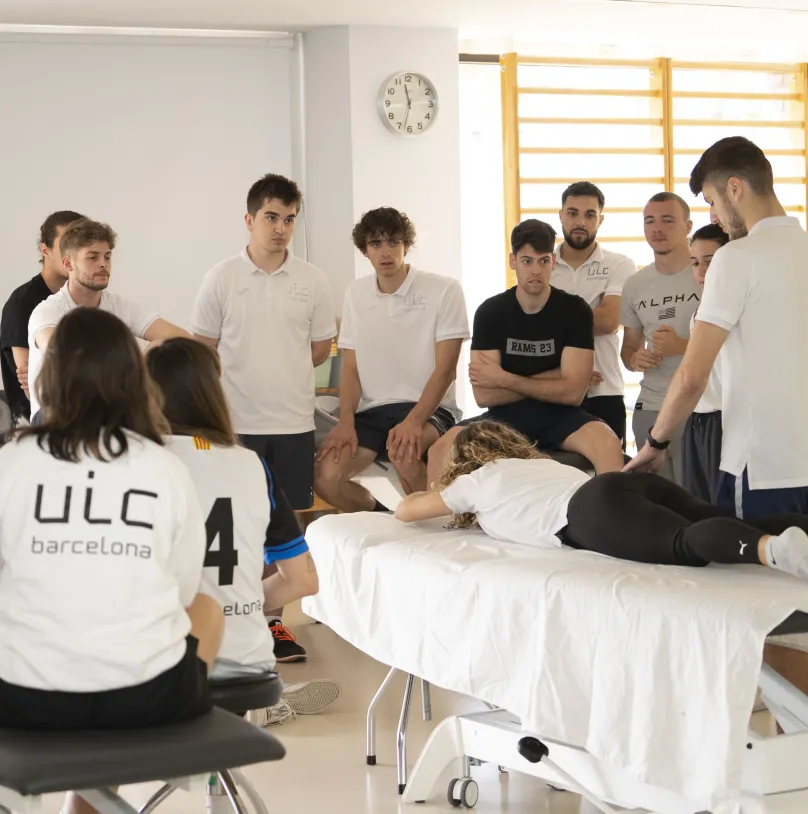 1.000 m² of gym facilities
Our gyms are equipped with state-of-the-art equipment and spacious areas, making practical sessions and training easier. We have everything you need to gain experience in a professional and high-quality environment,
-
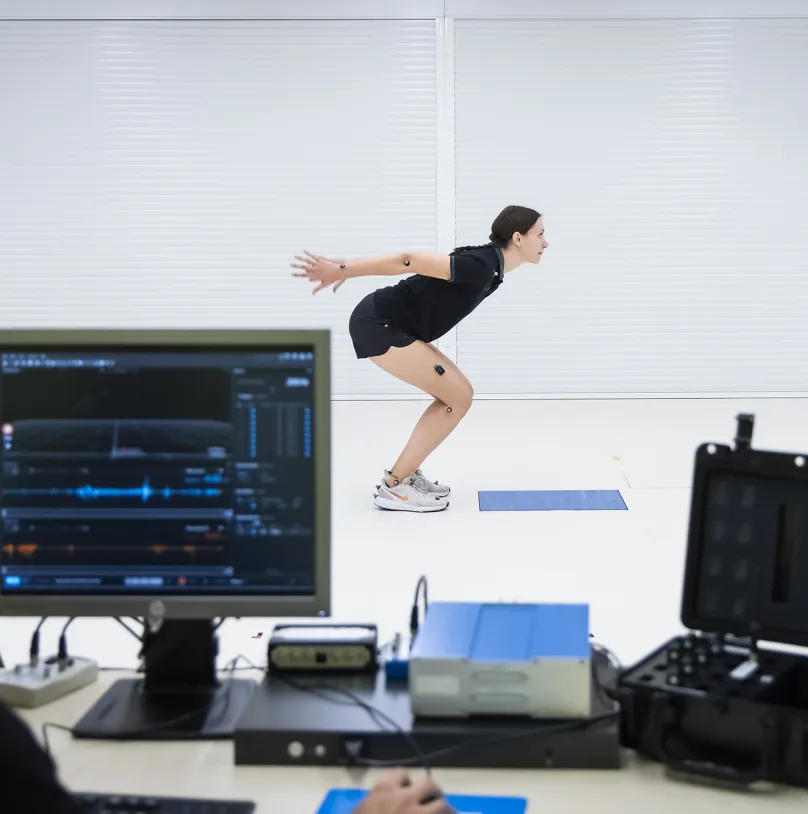 Biomechanics and Exercise Physiology Laboratory
This laboratory allows you to study human movement with cutting-edge equipment, such as force platforms and motion analysis systems. It is an ideal space for applying classroom learning to practice.
-
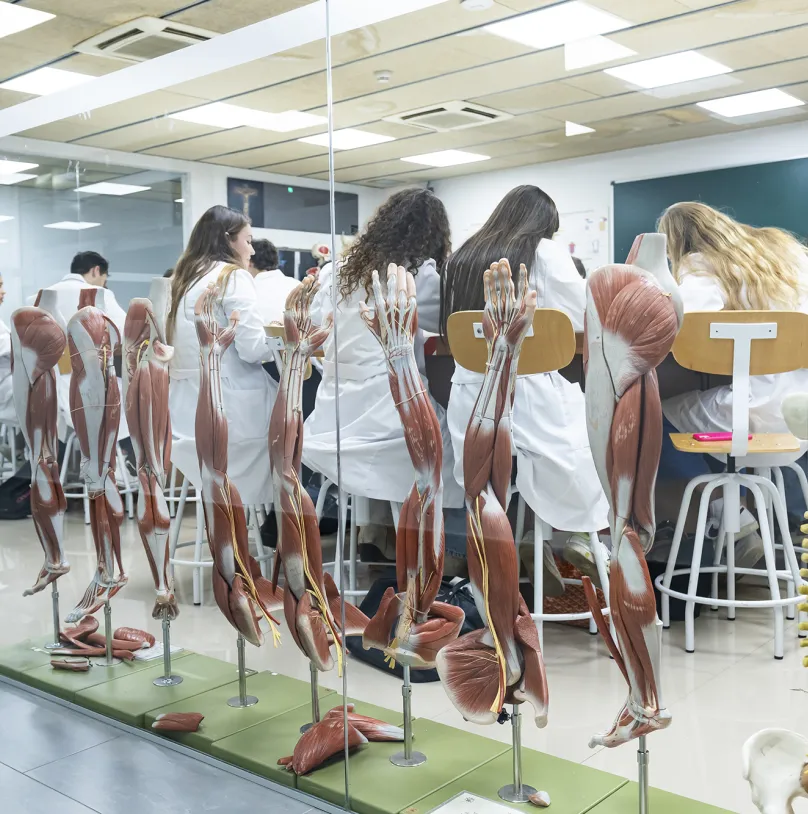 Bone repository and dissection room: real anatomical resources
UIC Barcelona’s bone repository and dissection room provide a unique space with real human bodies and anatomical models. Here, you will study human anatomy directly and in detail, enriching your practical training in Physiotherapy.
-
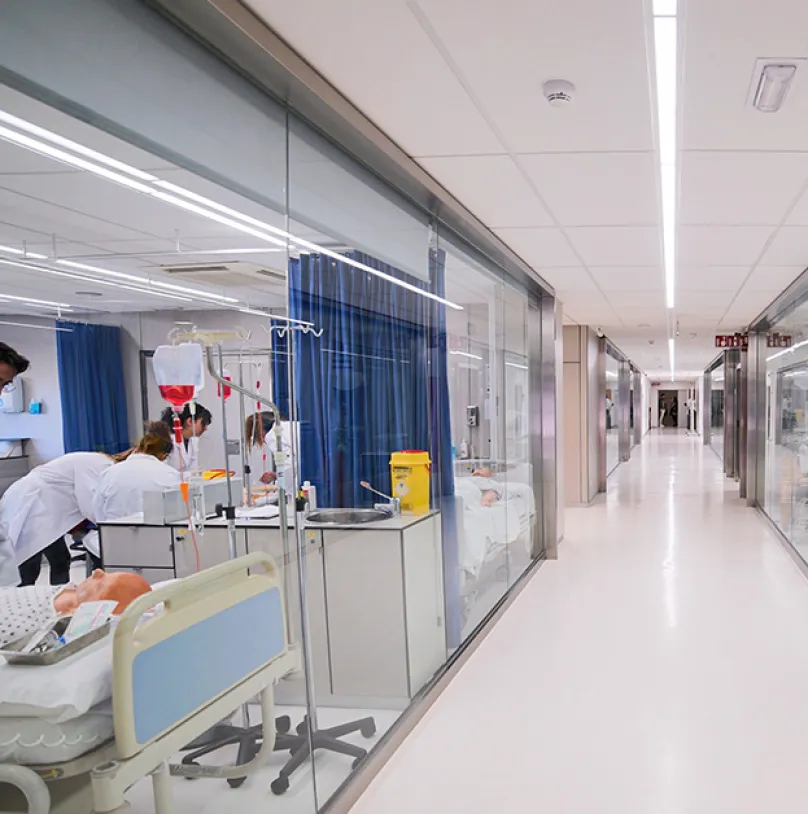 Advanced Simulation Centre (CISA)
CISA offers state-of-the-art simulators to help you train your clinical skills in a controlled environment. This facility allows you to face real-life situations safely, preparing you for your professional future with the best available resources.
Teaching team
Our teaching and research team
- a - f
- g - m
- n - r
- s - v
- w - z
BAGUR CALAFAT, Maria Caridad
Department of Physiotherapy
cbagur@uic.esTel. +34 932 541 800 Ext. 5924, 5230


Information sessions
Attend the next Informative Session
The University is organising open days for future university students who would like to know more about our institution and the programmes we offer.
Admission process
Admission process for master's and postgraduate programmes
-
Request information
-
Application for admission
- Delivery of documentation
- Validation of documentation
Assessment of candidate
Result of admission process
- Admission
- On hold
- No admission
Deposit paid
Enrolment
Between July and September
- Tuition paid
Welcome!
You are now part of UIC Barcelona
Required documentation
Students with an official university degree from within the European Union
- An attested original photocopy of their original degree certificate or of the homologation of the same, or an original attested photocopy of the receipt for payment of fees for issuing the degree certificate.
- An attested original photocopy of your academic transcript containing your marks for the university studies you have completed.
*If the documents are in a language other than Spanish, Catalan, English, French or Italian, please submit a sworn Spanish translation of your degree certificate and academic transcript.
Students with an official university degree from outside the European Union
- A legally certified original photocopy of your original degree certificate.
- A legally certified original photocopy of your academic transcripts from past university studies.
* The legal certification of documents should be undertaken submitted legalised in the country of origin, or if applies, by the stamp of the Haya Agreement or the Andrés Bello Agreement.
*If the documents are in a language other than Spanish, Catalan, English, French or Italian, please submit a sworn Spanish translation of your degree certificate and academic transcript.
In all cases
- Two passport-sized photos.
- A photocopy of your national ID card (DNI) or passport.
- An up-to-date CV.
- A letter of motivation.
- An attested photocopy of any other university degrees, including postgraduate degrees.
- If the documents are in a language other than Spanish, please submit a sworn Spanish translation of your degree certificate and academic transcript.
Tests
- Personal interview.
- Test of English level. Recommended level of English: B2 from the Common European Framework of Reference for Languages (CEFR).
Reservation and enrolment
Once accepted, you must pay 20% of the full cost of the University Master's Degree in Paediatric Physiotherapy in order to reserve a place.
The remaining 80% must be paid in one lump sum once enrolment is complete.
Anyone who fulfils the admission requirements and general prerequisites for access to the programme and an undergraduate Physiotherapy degree is eligible to apply. It is recommend that, in addition to the above pre-requisites, applications have an interest and motivation for research and health promotion of paediatric patients.
Means of entry
Anyone who fulfils the admission requirements and general prerequisites for access to the programme and an undergraduate Physiotherapy degree is eligible to apply. It is recommend that, in addition to the above pre-requisites, applications have an interest and motivation for research and health promotion of paediatric patients.
Welcome session for new students
The Universitat Internacional de Catalunya helps new students to feel welcome and included at a welcome session, which each master’s degree organises individually. They are informed about these sessions via a personal letter or e-mail.
In the welcome session, new students are provided with a general overview of UIC Barcelona, and then a representative of each of the following services briefly describes what their service consists of and the type of information and activities that are organised: Admissions, Student Services, the Sports Service, International Relations, and IT, etc. Subsequently the academic presentation of the Master’s degree programme will be provided by the course directors.
Transfers regulations
Application Process Deadlines for 2025-2026
First call for admissions
- Interview with pre-selected candidates: October 31
- Notification of results: November 14
- Deadline for place reservation: November 28
Second call for admissions
- Interview with pre-selected candidates: December 12
- Notification of results: December 25
- Deadline for place reservation: January 9
Third call for admissions
- Interview with pre-selected candidates: January 9
- Notification of results: January 23
- Deadline for place reservation: February 6
Fourth call for admissions
- Interview with pre-selected candidates: February 6
- Notification of results: February 20
- Deadline for place reservation: March 6
Fifth call for admissions
- Interview with pre-selected candidates: March 6
- Notification of results: March 20
- Deadline for place reservation: April 3
Sixth call for admissions
- Interview with pre-selected candidates: April 10
- Notification of results: April 24
- Deadline for place reservation: May 8
Seventh call for admission
- Interview with pre-selected candidates: May 8
- Notification of results: May 22
- Deadline for place reservation: June 5
Eighth call for admission
- Interview with pre-selected candidates: June 5
- Notification of results: June 19
- Deadline for place reservation: July 3
*Following each step, the applicants will be notified if they have been:
a) Accepted: You will receive your acceptance letter along with instructions on how to pay the deposit and reserve a place. Acceptance will only be confirmed upon payment.
b) Placed on a waiting list: Your application will be reviewed again during the next call.
c) Not accepted
Documents submission must be complete in order to include the applicant in each admission call. If some documents are missing, your application will be kept until completed and reviewed during the next admission call.
Prices, grants and financial aid
Price
Grants
UIC Barcelona offers various fellowships supported by both public institutes (MEC or AGUAR), as well as private UIC Barcelona funds.
For further information, please check with our admissions department:
Grants offered by UIC Barcelona for master's degrees and postgraduate programmes
Other grants
Those pursuing master's degrees or postgraduate programmes studies at UIC Barcelona are also eligible for other scholarships.
Financing
In order to make tuition fee payments easier for students, UIC Barcelona offers various financing options through its partner banks.
Payment facilities
UIC Barcelona offers different payment options.
Final Master Project
The Master’s Degree Final Project (TFM) is a compulsory course that integrates and consolidates the competencies acquired throughout the Master’s Degree in Paediatric Physiotherapy. It involves the individual preparation of an original academic work focused on a specific area of physiotherapy applied to the child and/or adolescent population.
The TFM may take different forms, such as a research project, a systematic review of the scientific literature, a clinical case study with a theoretical framework or the design and implementation of a research study. In all cases, the rigorous application of the scientific method is required, along with the critical use of up-to-date bibliographic sources and the integration of theoretical knowledge and advanced clinical competencies.
The project is carried out under the supervision of a tutor and concludes with the submission of a written dissertation and its public defence before an assessment board, during which the student must demonstrate scientific competence, critical analysis skills and professional maturity when presenting and defending their work.
International mobility
If you’re a student from another Spanish university or a university abroad, you can undertake a mobility stay at UIC Barcelona, for a semester or an academic year.
To find out everything you need to do before, during and after your mobility stay, please click on this link to find out the information you need for your faculty.
- Positive accreditation (344.85 KB)
- Spanish Universities Council Resolution (88.07 KB)