Places completes Màster Urgències
PROGRAM CLOSED FOR THE 2026-27 ACADEMIC YEAR
You can submit your application for the 2027–2028 academic year


This official master’s degree is recognised throughout the European Higher Education Area.
The programme integrates teachers and students from different clinical disciplines such as medicine and nursing
It includes practical training at our Comprehensive Centre for Advanced Simulation (over 1,000 m²) and clinical placements in leading hospitals with which we have partnership agreements. The programme also features workshops on ultrasound, electrocardiography, childbirth care, immobilisation techniques, and a special multiple-casualty workshop, among others.
- Certificates in Adult Advanced Life Support (SVA)
- Prehospital Trauma Life Support (PHTLS)
- European Pediatric Care (EPC)
- Tactical Emergency Casualty Care (TECC)
- Advanced Medical Life Support (AMLS)
With the collaboration of Docencia Salud
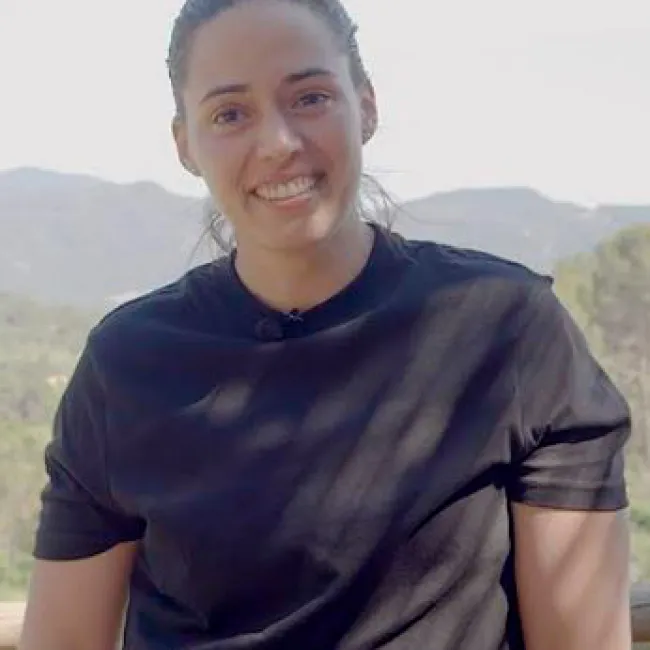
This master’s degree trains you in an everyday environment that is unusual for those of us who are used to working in the hospital. It teaches you how to take care of a patient on your own, in a duo formed by doctor and nurse.
The University Master's Degree in Urgent and Emergency Care has attracted professional experts from the field of urgent and emergency care to be part of its teaching team. It is taught in a face-to-face format using the most cutting-edge methods of healthcare education with work placements taking centre stage in the student’s learning.
The main objective of the University Master's Degree in Urgent and Emergency Care is to train and equip qualified doctors and nurses to respond adequately, effectively and efficiently to the needs that arise in in-hospital and out-of-hospital urgent and emergency situations, mainly in terms of healthcare, but also in research and teaching.
The specific academic objectives are:
The Master's degree is suitable for professionals who have a pre-EHEA undergraduate degree, a bachelor’s degree or diploma in nursing or medicine, who are looking to specialise in urgent care and in- and out-of-hospital emergencies.
Dr. Jordi Castillo García
Director of the University Master's Degree in Urgent and Emergency Care. PhD in Health from UIC Barcelona.
Dr. Francisco Javier Jacob Rodríguez
Co-Director of the University Master's Degree in Urgent and Emergency Care.
Mr. Martí Colet Masegosa
Coordinator of praticums
Máster Universitario en Urgencias y Emergencias Sanitarias por la Universitat Internacional de Catalunya
As part of the University Master's Degree in Urgent and Emergency Care at UIC Barcelona, external work placements give students the chance to fully apply the knowledge and skills they have acquired, in real circumstances, whilst under the supervision of a work placement tutor. These internships will take place during the months of Januaryto July.
They are undertaken as part of an individual programme in a network of healthcare centres and institutions specificallyselected for their care and research activity, and their potential for training professionals.
These rotations are performed in the following units and services:
Whilst undertaking the external work placement, students will prepare a report and submit it upon completing the placement. This will contribute to the student's mark.











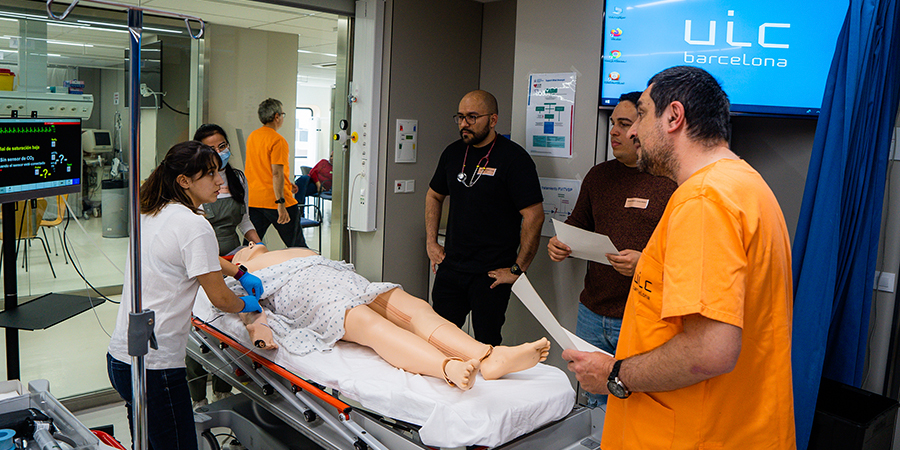
During the academic year, students will take part in several hands-on workshops in which they will put into practice everything they learn in the theory classes.
On the other hand, the master facilitates the simultaneous obtaining of additional specific accreditations:
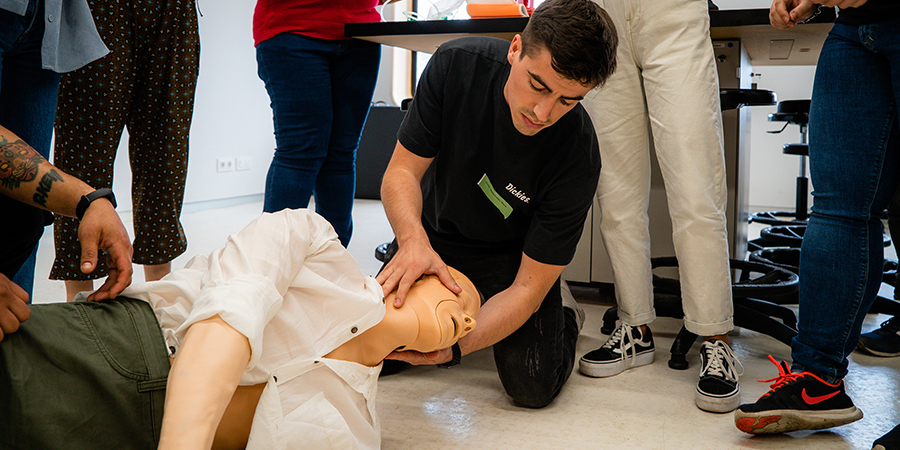
Throughout this programme, you will have access to our Comprehensive Centre for Advanced Simulation, where you will benefit from extensive practical content, simulations and workshops. In addition, our university is integrated within the General University Hospital of Catalonia, where you will be able to undertake clinical placements.
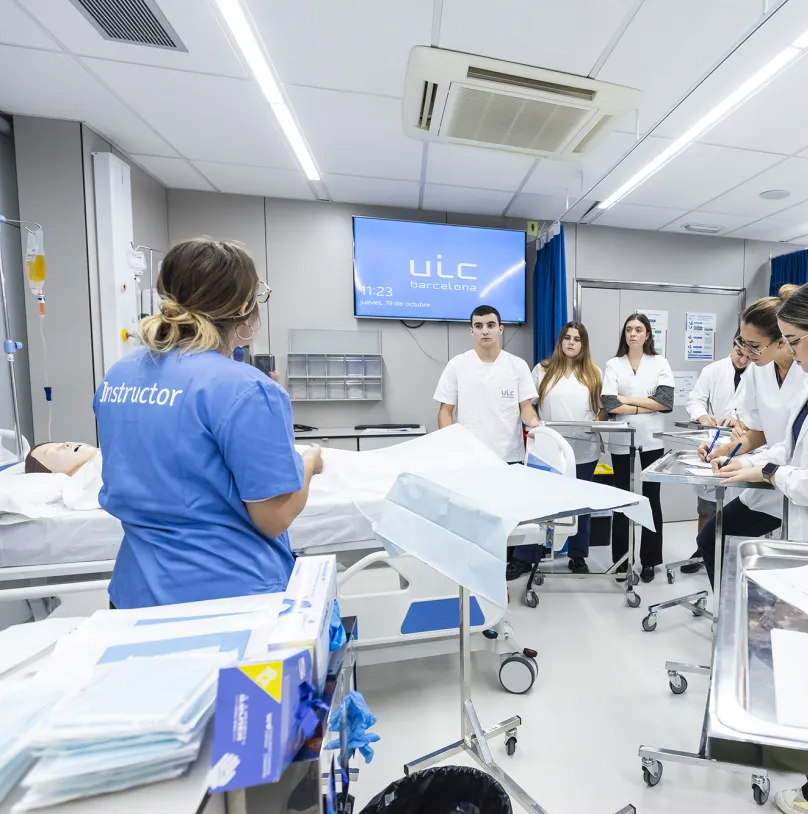
Centre of more than 1,000 m² with spaces dedicated to advanced clinical simulation.
It provides a realistic environment for developing nursing skills and competencies, enhancing students’ preparation for practical and professional scenarios.
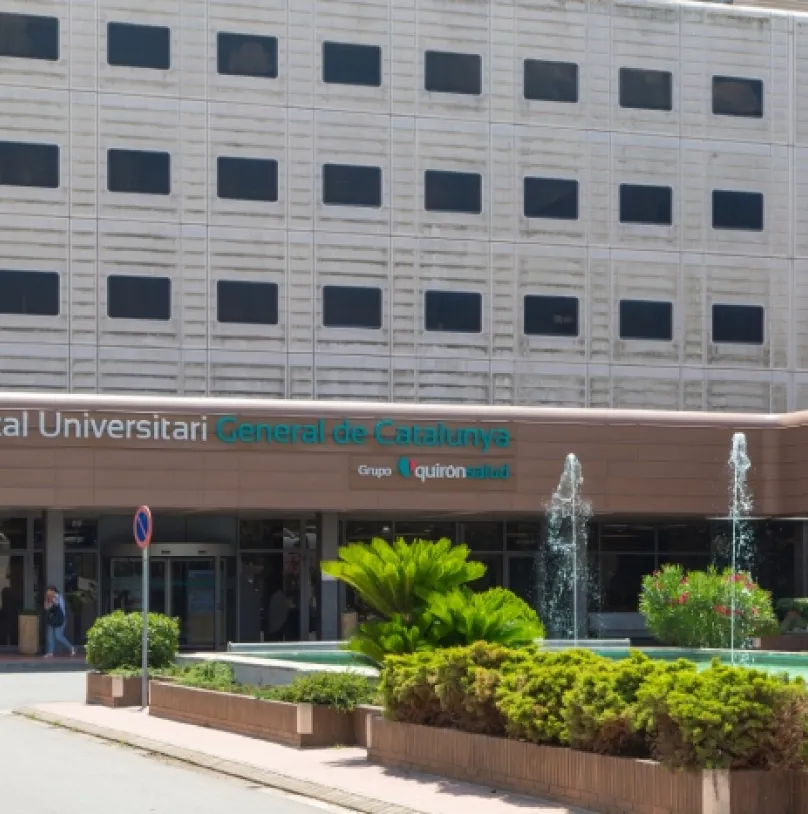
Thanks to its integration with UIC Barcelona, students gain real clinical experience. The synergies between the hospital and the University guarantee a practical and immersive education in a hospital environment, training competent professionals.
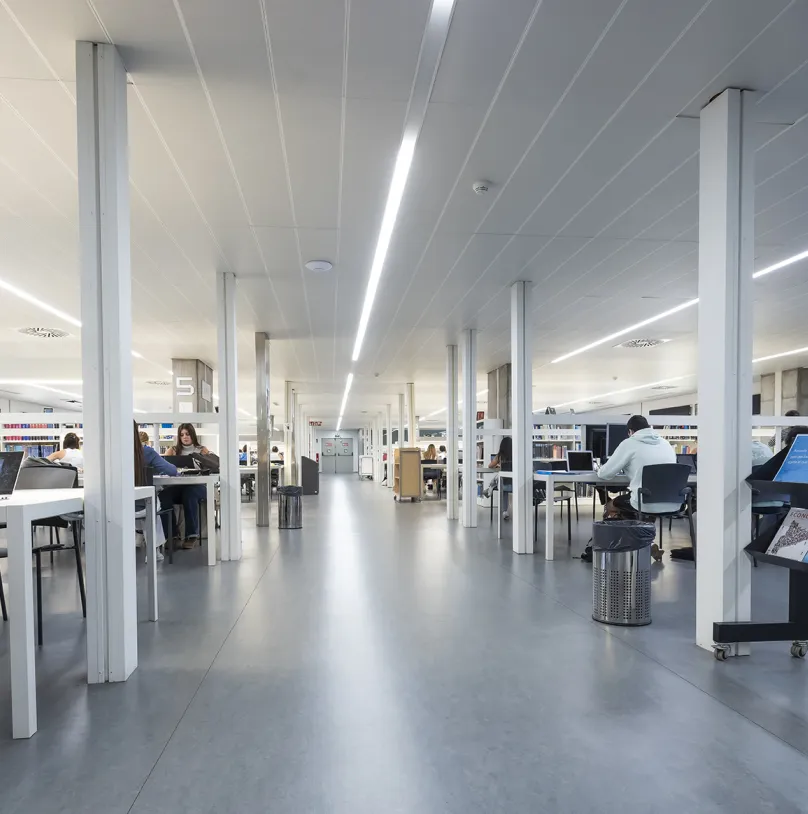
A modern and complete space with access to physical and digital resources. It offers updated and specialised materials that complement independent learning and support nursing students’ academic studies.
The knowledge and skills obtained from this master's degree will allow medicine and nursing graduates to expand their professional work into areas such as:
The University is organising open days for future university students who would like to know more about our institution and the programmes we offer.
Between July and September
Welcome!
Candidates wishing to apply for a place on the programme must provide the following documentation:
The admissions procedure consists of a weighted assessment of the candidate’s professional and research record and a face-to-face interview with a member of the Academic Master’s Degree Committee.
In the event that demand exceeds the number of places available on the Master's degree, the admission criteria will also include:
Once the admission procedure is complete, the Information and Admissions Service, which is responsible for managing the entrance examinations, will notify each candidate of their results.
Anyone who fulfils the admission requirements and general prerequisites for accessing the degree programme may apply. The degree programmes with access to this master’s degree are: Holders of a pre-EHEA undergraduate degree, a bachelor’s degree or diploma in nursing or medicine who are looking to specialise in caring for patients who enter hospital through the Accident & Emergency Department, or caring for them in in- and out-of-hospital emergency situations.
Information about regulations for transfer can be found by clicking on the following link.
Information about the welcome and advice provided by UIC Barcelona can be found here:
UIC Barcelona offers various fellowships supported by both public institutes (MEC or AGUAR), as well as private UIC Barcelona funds.
For further information, please check with our admissions department:
Grants offered by UIC Barcelona for master's degrees and postgraduate programmes
Those pursuing master's degrees or postgraduate programmes studies at UIC Barcelona are also eligible for other scholarships.
In order to make tuition fee payments easier for students, UIC Barcelona offers various financing options through its partner banks.
UIC Barcelona offers different payment options.
Final Master’s Degree Projects (TFM) are carried out individually and are, fundamentally, self-led projects that each student will complete under the guidance of a tutor who will help to motivate and facilitate the student’s learning process.
The number of credits allocated to the TFM is 9 ECTS, equivalent to 132 hours of study/student, during which time all the planned tasks including data and preliminary information research, scheduling, planning and structuring of content, organisation and completion will be carried out.
The main objective of the TFM is for the student to demonstrate the knowledge they have acquired during the university master's degree terms of methodology, scheduling, structure, planning, organisation, and communication of the proposed work methods and of the tasks necessary for their implementation.
Students must use the TFM to demonstrate that they are able to describe and analyse the problem under investigation based on previous studies and scientific background by planning research objectives and design, appropriate applications and the development of the scientific method, as well as foreseeing and applying the methodology for the evaluation of the results.
The Academic Master’s Degree Committee is tasked with:
LINE 1: PALLIATIVE CARE FOR END OF LIFE AND CHRONIC ILLNESS. COMMUNICATION WITH PATIENTS
Objectives:
Objectives:
LINE 3: TRANSLATIONAL, CLINICAL AND APPLIED RESEARCH
Objectives:
LINE 4: INFECTIOUS DISEASES: PREVENTION, DIAGNOSIS AND TREATMENT
Objectives:
Alumni Ambassadors are former students who have volunteered to talk about their experience at UIC Barcelona. With them you can address any doubts about your chosen studies, the university and the student experience.
The Alumni Ambassadors are volunteer alumni who will explain their experience at UIC Barcelona to you. With them you will be able to resolve any doubts that may arise about the chosen program, the University and your experience as a student.
Don't miss this magnificent opportunity to learn first-hand what it means to do a program at UIC Barcelona and the value it brings you in the development of your career. If you have any specific questions about the admission process, scholarships, visas or financial aid, you can contact directly admisiones@uic.es.