Universitat Internacional de Catalunya

Study search

Use this search engine to find the courses that interest you.

Theoretical-Practical Course On Mini-Screws and Skeletal Anchorage

Theoretical-Practical Course On Mini-Screws and Skeletal Anchorage Cris Helo
930192304
Spanish

Course Presentation

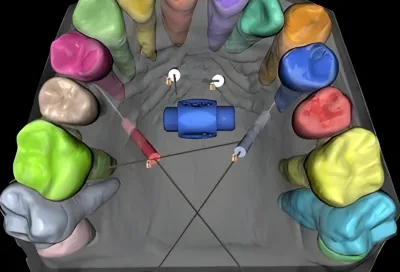
Miniscrews and, overall, all skeletal anchorage are widely used bone anchorage elements in current orthodontic practice. Their clinical application ranges from situations of lack of anchorage, orthodontic movements where conventional anchorage does not suffice, or orthopedic treatments that until very recently were only indicated in children and can now be applied to adolescents and adults. For this reason, the routine use of mini-screws and skeletal anchorage significantly broadens treatment possibilities, and their knowledge is essential in clinical practice.

There is a before and after in the field of Orthodontics with the advent and routine use of mini-screws and skeletal anchorage. Thus, the objective of the XIII edition of the theoretical-practical course on mini-screws and skeletal anchorage conducted by the Orthodontics Area is to provide comprehensive knowledge from A to Z in skeletal anchorage, enabling its immediate use in clinical practice.

Assessment method:

An online self-assessment test will be carried out at the end of the course so that students can assess the  achievement  of their personal goals and their knowledge of the content of the course.

Course coordinators

D. Núria Clusellas.
D. Ignasi Arcos.

Anul·la vista automàtica
Off
  • Be in possession of a Bachelor's/Graduate's degree in Dentistry or Medicine (specialty in stomatology).


1014
Continuing Education
Dentistry
Spanish
English
Online
Blended learning
+34 93 504 20 00
Register
1
Off
-60
0
1
Document
/sites/default/files/curso-minitornillos-esp.pdf
curso-minitornillos-esp.pdf
1
Course coordinators
PUIGDOLLERS PÉREZ, Andreu
CLUSELLAS BARRIONUEVO, Núria
ARCOS PALOMINO, Ignacio

Professors

Dr. Renato Cocconi, Dr. Eduardo Espinar, Dr. Pedro Lorente, Dra. Carmen Lorente, Dr. Javier Prieto, Dr. Carlos Flores-Mir, Dr. Flavio Uribe, Dr. Christodoulos P. Laspos, Dr. Manuel Lagravere Vich, Dr. Juan Fernando Aristizabal, Dr. Nazan Kucukkeles, Dr. Eduardo Messen, Dr. Eduardo Vazquez, Dr. Andreu Puigdollers, Dr. Marcos Costa, Dr. Fernando de la Iglesia, Dra. Ana Molina, Dr. Oriol Quevedo, Dra. Núria Clusellas, Dr. Federico Hernández-Alfaro, Dra. Adaia Valls, Dra. Raquel Guijarro, Dr. Jorge Masià, Dr. Ramón Sieira, Dr. Florencio Monje, Dr. Benito Ramos, Dra. Alicia Dean, Dra. Jocelyn Shand, Dr. Massimo Robiony, Dr. Rafael Alcalde, Dr.Mirco Raffaini, Dr. Orion Haas, Dr. Rodrigo Fariña, Dr Daniel Brusco, Dr. Derek Steibacher. Dr Alejandro Mazarro, Dr David Neagu.

The coordinators and lecturers have no financial ties to any companies that would pose a conflict of interest with the course. 

infodonto@uic.es
0
On
English

Training course in Interceptive orthodontics and functional orthopaedics

Training course in Interceptive orthodontics and functional orthopaedics uicadmin
930192304
Limited
From 9 a.m. until 7 p.m.
Spanish (secondary language: English)

Presentation

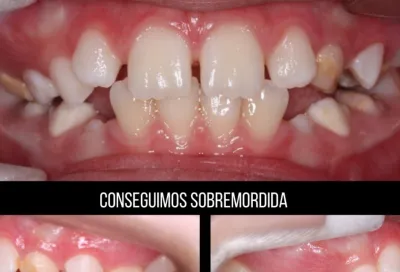
Interceptive orthodontics starts and ends during the primary or mixed dentition phase. This type of treatment is habitually used to correct abnormal habits, which can interfere with the normal growth pattern of the face and jaws.

Assessment method

An online self-assessment test will be carried out at the end of the course so that students can assess the  achievement  of their personal goals and their knowledge of the content of the course.

Course objectives

  • Give students the skills they need to diagnose dentofacial problems in paediatric patients and assess when to start treatment.
  • Create accurate diagnostic records.
  • Dental photography, the best diagnostic method to use at the clinic.
  • Training and experience in multiple early treatment philosophies.
  • Understand the technical skills needed to carry out treatment.

Competences to be acquired by students

  • To know how to distinguish the normal from the pathological in the mixed and temporary dentition stage.
  • To learn how to apply the basic principles of diagnosis in common occlusive alterations.
  • To show through specific clinical situations the parameters to be followed (with the use of clear and simple protocols) in the interception of a future malocclusion.

Prospective students

The course is aimed at general dentists, stomatologists and specialists in paediatric dentistry.

Anul·la vista automàtica
Off
  • To be in possession of an undergraduate/bachelor’s degree in Dentistry or Medicine (specialist area Stomatology).
610
Continuing Education
Dentistry
Spanish
English
On site
+34 93 504 20 00
Register
1
Off
3
0
1
Document
/sites/default/files/curso-formacion-ortodoncia-interceptiva-esp.pdf
folleto-curso-ortodoncia-interceptiva-cat
1
Course Coordinators

The coordinators and lecturers have no financial ties to any companies that would pose a conflict of interest with the course.

GUINOT JIMENO, Francisco Antonio
GARCIA VILLA, Cristina
infodonto@uic.es
0
On
English

Update In Oral Radiology

Update In Oral Radiology uicadmin
930192304
Limited

Presentation

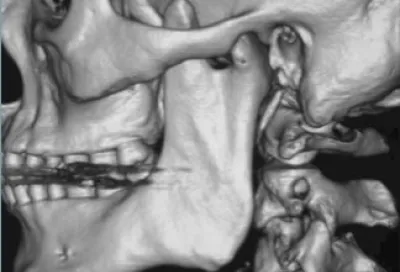
Cone Beam Computed Tomography (CBCT) is a technology commonly used now in imaging centres and dental practices. It is essential to have an in-depth understanding of the indications for this technology, such as learning to diagnose in three dimensions and  to revisit radiological anatomy and pathology from the tomographic perspective.

Assessment method

An online self-assessment test will be carried out at the end of the course so that students can assess the  achievement  of their personal goals and their knowledge of the content of the course.

Course objectives

  • Provide a review of anatomy and oral pathology and familiarise the student with interpreting tomographic images, for planning surgeries as well as diagnosing the most common pathologies.  
  • Highlight the radiographic signs indicating benign and malignant disease. 
  • Teach student to recognise the most common lesions, their radiographic characteristics and their possible differential diagnoses.


Skills to be acquired by students

  • Detect pathology on CBCT scans that is not visible in conventional radiology.
  • Differentiate the normal from the pathological, therapeutic and iatrogenic.
  • Protocolise radiological studies to obtain the most information.

Who should take this course

The course is aimed at dentists, stomatologists, maxillofacial surgeons, radiologists.

Anul·la vista automàtica
Off
810
Continuing Education
Dentistry
Spanish
English
Online
+34 93 504 20 00
Register
1
On
-38
0
1
Document
/sites/default/files/actualizacion-en-radiologia-oral-online.pdf
actualizacion-en-radiologia-oral-online.pdf
1
Course Coordinator
MARTÍNEZ MIRAVÉ, Araceli

Teachers

  • Dr. Oriol Cantó
  • Dr. Raúl Medina
  • Dr. Francisco Real
  • Dra. Rosario Cedeño

The coordinators and lecturers have no financial ties to any companies that would pose a conflict of interest with the course.

infodonto@uic.es
0
On
English

Webinars in Orthognathic Surgery and Surgical Orthodontics

Webinars in Orthognathic Surgery and Surgical Orthodontics uicadmin
930192304
Limited
From 8.30 p.m. to 10.30 p.m.
Spanish and English

Presentation

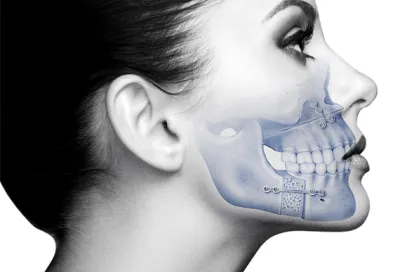
The treatment of maxillofacial deformities through orthognathic surgery techniques and orthodontics has undergone a diagnostic and therapeutic evolution in recent years.

The Surgery and Orthodontics Departments at UIC Barcelona are able to rely on various professionals with experience and know how in this field. UIC Barcelona's Orthodontics and Dentofacial Orthopeadics Area is recognised as an accredited member of NEBEOP and the Maxillofacial Institute is a European benchmark in the area of orthognathic surgery treatments.

Assessment method

An online self-assessment test will be carried out at the end of the course so that students can assess the  achievement  of their personal goals and their knowledge of the content of the course.

Objectives

  1. To provide tools for diagnosis, clinical planning and 3D radiology.
  2. To master the essential concepts of the orthodontic handling of surgical cases.
  3. To incorporate the various surgical treatment techniques.
  4. To stress the collaboration process between the orthodontist and surgeon in these treatments.
  5. To provide an update on the latest advances in this field.

Prospective students

  • Maxillofacial Surgery specialists and residents
  • Orthodontics specialists and residents
  • Dentists/odontologists
  • Doctors of Stomatology
Anul·la vista automàtica
Off
  • To be in possession of an undergraduate/bachelor’s degree in Dentistry or Medicine (specialist area Stomatology).
378
Continuing Education
Dentistry
Spanish
English
Online
+34 93 504 20 00
Get informed
Register
1
On
-3
0
1
Document
/sites/default/files/folleto-webinars-cirugia-ortognatica-ortodoncia-quirurgica-esp.pdf
Folleto webinars-cirugia-ortognatica-ortodoncia-quirurgica ESP
1
Course Coordinators
HERNANDEZ ALFARO, Federico Jose
PUIGDOLLERS PÉREZ, Andreu
VALLS ONTAÑÓN, Adaia
CLUSELLAS BARRIONUEVO, Núria

Teachers

Dr Federico Hernández-Alfaro, Dr  Adaia Valls, Dr Núria Clusellas, Dr Andreu Puigdollers, Dr Javier Prieto, Dr Carlos Villegas Bateman, Dr Carlos Flores-Mir, Dr Flavio Uribe, Dr Christodoulos P. Laspos, Dr Manuel Lagagere Vich, Dr Juan Fernando Aristizabal, Dr Nazan Kucukkeles, Dr Eduardo Messen, Dr Eduardo Vázquez, Dr Marcos Costa, Dr Marcos Costa, Dr Fernando de la Iglesia, Dr Ana Molina, Dr Oriol Quevedo, Dr Raquel Guijarro, Dr Jorge Masiá, Dr Ramón Sieira, Dr Florencio Monje, Dr Benito Ramos, Dr Alicia Dean, Dr Jocelyn Shand, Dr Massimo Robiony, Dr Rafael Mayor, Dr Gabriele Millesi, Dr Mirco Raffaini, Dr Orion Haas, Dr Rodrigo Fariña, Dr Daniel Sudurdo, and Dr Derek Steibacher.

The coordinators and lecturers have no financial ties to any companies that would pose a conflict of interest with the course. 

infodonto@uic.es
0
On
English