Fully booked Bachelor's Degree in Medicine
APPLICATIONS FOR THE 2026-2027 ACADEMIC YEAR ARE CLOSED
You can submit your application for the 2027–2028 academic year


The Bachelor’s Degree in Medicine at UIC Barcelona offers a comprehensive and multidisciplinary training, with a strong commitment to scientific rigour, professional excellence and humanised care. From day one, you will be immersed in an advanced clinical environment, where cutting-edge technology and simulation practices will allow you to develop technical, communicative and ethical skills.
You will be part of an innovative programme that combines personalised medicine, prevention, attention to social problems and the doctor-patient relationship, with a global and humanistic perspective of health. Our training approach not only seeks to prepare you to be a highly competent doctor, but also as an agent of change committed to equity, sustainability and improving the well-being of the community.
The Comprehensive Centre for Advanced Simulation (CISA), with more than 1,000 m², offers simulations of outpatient, surgical and hospitalisation treatments. You will train in a realistic environment with advanced technology, developing emotional intelligence, resilience, critical thinking and respect for the patient’s wishes.
From day one, you will address clinical cases and learn from experience with over 2,200 hours of practical training in hospitals and at CISA. With personalised tutoring, you will develop skills in patient-centred care, conflict resolution and evidence-based decision-making.
From the third year, you will evaluate your competencies through ECOE assessments with standardised patients. These accredited tests will hone your clinical, diagnostic and communication skills, preparing you to deliver quality care, based on compassion and respect for the patient.
You will work as a team with students from disciplines such as Nursing, Psychology and Physiotherapy on the health campus. Interprofessional training fosters a holistic vision of medicine and prepares you to face the challenges of the future with a collaborative, patient-centred perspective.
You will receive a rigorous medical training, with an ethical and humanistic approach that will allow you to develop skills such as integrity, impetus to learn more, motivation and enthusiasm. You will be a professional with a solid scientific base and a deep commitment to service to society.
UIC Barcelona has a MIR pass rate of 99%, demonstrating its academic excellence. Its teaching model guarantees not only technical knowledge, but also a holistic view of medicine, based on patient-centred care and social commitment.
11 % d’alumnes estrangers en formació reglada. Alumnes de 24 països diferents.
WFME Accreditation
An internationally recognised degree that opens doors around the world
UIC Barcelona’s Medicine degree is the first private programme in Spain to be accredited according to the standards of the World Federation for Medical Education (WFME). This international recognition certifies the highest quality standards in medical education.
From 2024 onwards, only graduates from faculties accredited by a WFME-recognised agency will be eligible to work, undergo postgraduate training or participate in clinical practice placements in the United States. Consequently, the fact that the Bachelor’s Degree in Medicine has been accredited by AQU Catalunya, an agency accredited by the WFME, opens up new career opportunities in the US and in many other countries that recognise these standards of excellence.
Studying Medicine at UIC Barcelona means choosing a rigorous, global education with an international outlook.
In the UIC Barcelona Bachelor’s Degree of Medicine, practical training and academic excellence are our priorities. The figures support the educational quality of our programme, which prepares students to become highly trained doctors.
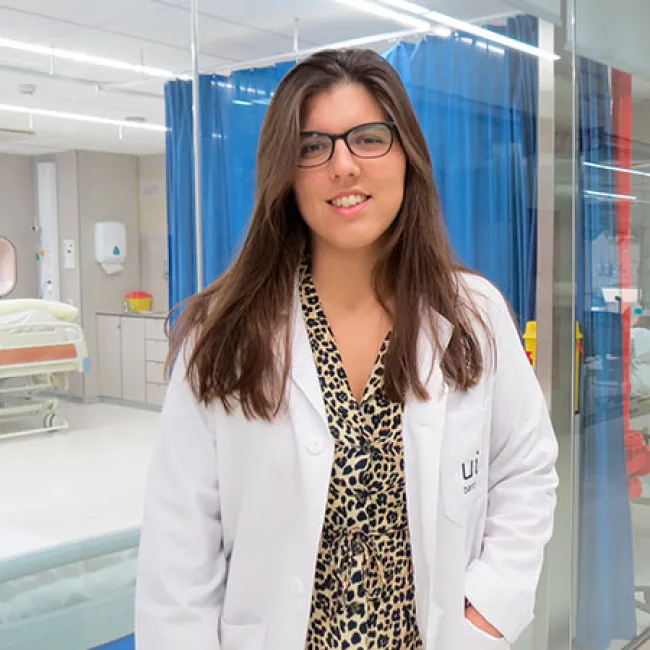
During the Degree in Medicine, we learn the importance of medical ethics as a fundamental aspect of being good professionals. Technical knowledge in a doctor is a given, it is the humane quality of healthcare that makes the difference, and that's definitely our university's brand.
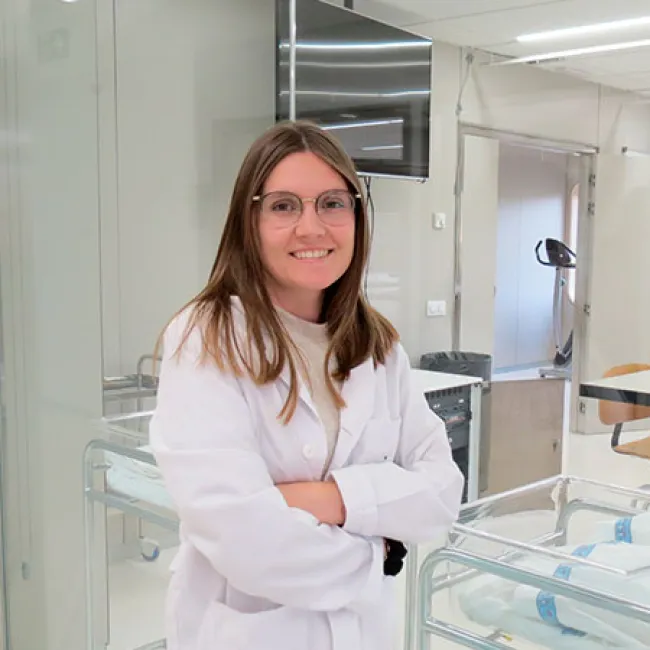
What I would highlight about Medicine at UIC Barcelona is having hospital practice from year 1 at a wide range of hospitals, with an integrated professional team and individual tutoring.
At UIC Barcelona we work with hospitals, health centres and other institutions to provide clinical and training experiences that prepare you for the challenges of medicine. You will find the list of all the centers in the internships section.





The academic curriculum for UIC Barcelona’s Medicine Degree is focused on training students based on active educational methodologies with a strong emphasis on information technologies and communication. These teaching methodologies aim to train future doctors in what are known as transversal skills, including interpersonal communication skills, analysis and synthesis, the ability to work as part of a team, self learning, selective acquisition of information, developing a critical sense, etc.
Studying Medicine at UIC Barcelona brings students into contact with patients from an early stage, giving them the opportunity to gain first hand experience of the health system.
Later on students join one of the teaching units, which are accredited health centres, where they combine practical participation with guided study in the different subject areas.
Since the mid-sixties of the last century, there have been serious attempts at various faculties and schools to orient the curriculum towards competencies. The Flexner model that was imposed at the beginning of the 20th century is based on imparting and acquiring the knowledge that enables the good practice of medicine. The emphasis on competencies appears with the need to be sure that students who become professionals are truly capable of exercising the profession. The paradigm that assumes that acquiring adequate knowledge is synonymous with being a good professional enters a crisis, and a new paradigm is sought based on the demonstration that they really are good professionals.
Building objectives according to competencies seems very real from this point of view since it also means focusing on the results you want to achieve. Various institutions and universities have proposed and / or implemented competency-oriented study plans. We will highlight the efforts of the International Institute of Medical Education that has elaborated the Global Minimum Essential Requirements and has implemented them in a series of Chinese universities, and also the proposal of the National Agency for Quality Assessment and Accreditation contained in its White Paper on medicine studies. Even though the orientations of all these proposals are frankly similar, how could it be otherwise, the proposal of the UIC Barcelona curriculum that we present follows the competency scheme developed by the Faculty of Medicine of the University of Dundee, a center pioneer in medical education, because it is considered that they detail and specify better some of the competency dimensions of the medical profession that, in other proposals, are not so well characterized. Finally, it is not necessary to mention that the design of a plan by competences is consistent with the will to adapt to the philosophy of Bologna and to the directives that the Ministry of Education and the Commissioner of Universities of the Generalitat of Catalonia have prepared on this topic.
The curriculum that is presented wants to take advantage of its novelty to introduce all those characteristics that are convenient for the training of a doctor of the 21st century and that are more difficult to implement in schools with a strong tradition and history:
This study plan presents three large groups or chapters of competencies that are named based on what they describe:
Each of these groups gathers a series of dimensions up to a total of twelve. The first two groups together the specific competencies that will be developed in the plan in an integrated way during the six years, based first on the large groups of organs and systems, and later on groups of care levels. The third chapter groups together what is understood as transversal competences, which are independent of organs, systems and levels of care, and are developed through a series of horizontal subjects that are taught in each course of the degree.
We could define this third group as that of “humanities and professionalism” in which the acquired skills and knowledge are applicable to any of the situations of professional, medical or any other practice.
The competences of the curriculum of the Degree in Medicine include the principles of respect for the dignity of the human person throughout his life cycle, the fundamental rights of equality between men and women, the promotion of human rights, and principles of universal accessibility and of values proper to a culture of peace and democracy.
Candidates who meet the procedures and general requirements for access to the degree can apply for admission. However, the recommended profile is that of a person with previous training in the area of health sciences, with a vocational attitude towards science and medicine and in which the following skills stand out:
Unload the document with graduate skills
Graduado o Graduada en Medicina por la Universitat Internacional de Catalunya
The Medical Education Unit depends directly on the Director of the Department and helps in the correct development of the curriculum and the improvement of the teaching quality of the teaching staff.
This unit ensures the quality of teaching, through the initial and continuous training of teachers according to the needs detected and advances in Medical Education at national and international level, encouraging innovation, promoting adaptation to new teaching and assessment methodologies and very especially in the clinical simulation environment.
Its main function is to promote the development of teachers' teaching skills by ensuring their training, promoting innovation in the classroom, promoting research in Medical Education and implementing improvement actions identified by the Quality Commission or promoted by the Department Board.
Objectives:
Priority lines of research:
Members:
The Medical Education Unit includes members of the Centre Board, teachers with experience and interest in the field of medical education, methodological and statistical support staff.
Published articles:
References of published articles
Medical Education Unit. Relationship with other Units and Departments
Practice in national and international institutions from year 1.
You will be in touch with the patient from year 1 thanks to more than 2,200 hours of external clinical practice in more than 20 different centres. You will be able to choose between university hospitals, associated hospitals or primary care centres both nationally and internationally.
We believe that clinical practicums are a fundamental part of learning about the medical profession, and that tutors, as rigorous professionals, are the vehicle that makes this learning possible.
The main objective for these clinical practicums is to help students acquire the knowledge, skills and attitudes of a general practitioner so that they can carry out the profession confidently and independently. Students learn through hands-on experience and by observing the numerous professional roles involved in caring for patients. They are accompanied at all times by a tutor who supervises and facilitates their learning.
The practicums are carried out in different areas of healthcare (primary care, accident and emergency, medical and surgical services, social-healthcare, etc.). By gaining such broad experience, students will become familiar with professional medical roles and see how each of these healthcare services functions.
Throughout the practicums, students will have the chance to care for patients and put their ‘student-patient’ relationship into practice, including communication skills and empathy, as well as seeing the essential role teamwork plays in healthcare environments.
In order to gain this knowledge, the programme includes practical subjects with clearly defined objectives, methodologies and assessment systems, which are outlined in the corresponding syllabuses.
The clinical practicums are organised as subjects from the third to fifth year and culminate in the sixth ‘rotatory’ year of the bachelor’s degree.
Each subject has a syllabus that outlines its fundamental aspects: objectives, methodology, skills to be acquired, and finally, the assessment system. It is very important to bear these aspects in mind as they will serve as a guide for students to follow independently wherever they carry out their practicums.
During the practicums period, students will also attend four workshops on personal development and growth over the course of one week. These workshops will focus on cross-disciplinary skills centred around individual and healthcare-related values, strengths to help with decision-making, tips for managing one's emotions and personal and interpersonal communication.
| Academic year | Subject | Practicum location | Duration |
|---|---|---|---|
| 3rd | Medical clinical practicum I | Medical clinical practicum I | 5 weeks |
| Geriatrics | |||
| 4th | Medical clinical practicum II | Medical specialities | 4 weeks |
| Surgical practice | General surgery and surgical specialities | 4 weeks | |
| 5th | Primary care (PC) | Primary Care Centres (CAPs) | 2 weeks |
| Paediatrics | Paediatric services | 4 weeks | |
| Elective Practicums | |||
| Dermatology in Practice | Dermatology Services | 2 weeks | |
| Critical Medicine: Protocols in Immediate Action | Intensive Medicine Services | 2 weeks | |
| Ophthalmology in Practice | Ophthalmology Services | 2 weeks | |
| Oncology in Practice | Ophthalmology Services | 2 weeks | |
| Sports Traumatology | Traumatology Services | 2 weeks | |
From Cognitive Normality to Dementia: Practical experience in Clinical, Research and Translational Medicine | ACE Foundation | 2 weeks | |
The sixth and final year of this bachelor’s degree is highly practical. Students will be supervised by a clinical tutor and will practice medicine with greater autonomy, which represents a qualitative leap forward compared to the clinical practicums carried out in previous years.
The aim is for students to rotate through different levels of care and clinical specialities and acquire a skill set of a professional standard that allows them to treat more complex conditions, implement their knowledge and skills, make accurate decisions and develop ethical attitudes, values and behaviour centred around the patient.
The rotatory year is made up of six subjects:
| Subject | Duration |
|---|---|
| Medical specialities rotation | 9 weeks |
| Surgical specialities rotation | 9 weeks |
| Primary care rotation | 2 weeks |
| Free rotation | 6 weeks |
| Social-healthcare rotation | 2 weeks |
| Social services rotation | 2 weeks |
The social services rotation helps expose students to the humanistic and social side of medicine as well as healthcare-related altruism.
The following activities will also be carried out alongside the rotation schedule:
Internships mainly take place at Universitary and Associate Hospitals:
The Final Degree Project (FDP) is carried out during the sixth year. Through the FDP students develop autonomously and supervised by a tutor a research project or scientific article that they have to defend publicly before a research committee.
It is intended that students demonstrate their level of professional competence in their approach to a research project related to medicine in its different areas. In this way, they must put into practice the knowledge acquired with respect to research and the genesis of knowledge that will prepare them to obtain a doctorate degree if they wish to acquire it.
Research projects or articles can be framed within the following research areas:
The modalities of the FDP are, among others, the following:
In order to carry out the defense act, 300 credits corresponding to the first to fifth courses must be approved.
To enroll in the FDP, students must have passed the following research-related subjects:
The objectives of the FDP are:
A UIC Barcelona, les nostres instal·lacions estan dissenyades per oferir-te una formació de qualitat en Medicina. Des del Centre Integral de Simulació avançada (CISA) fins a la col·laboració amb l’Hospital General de Catalunya, els nostres espais estan equipats amb tecnologia avançada. Aquestes sinergies i recursos garanteixen una formació pràctica, multidisciplinari i centrada en l’excel·lència científica, i et preparen per ser un professional competent i compromès.
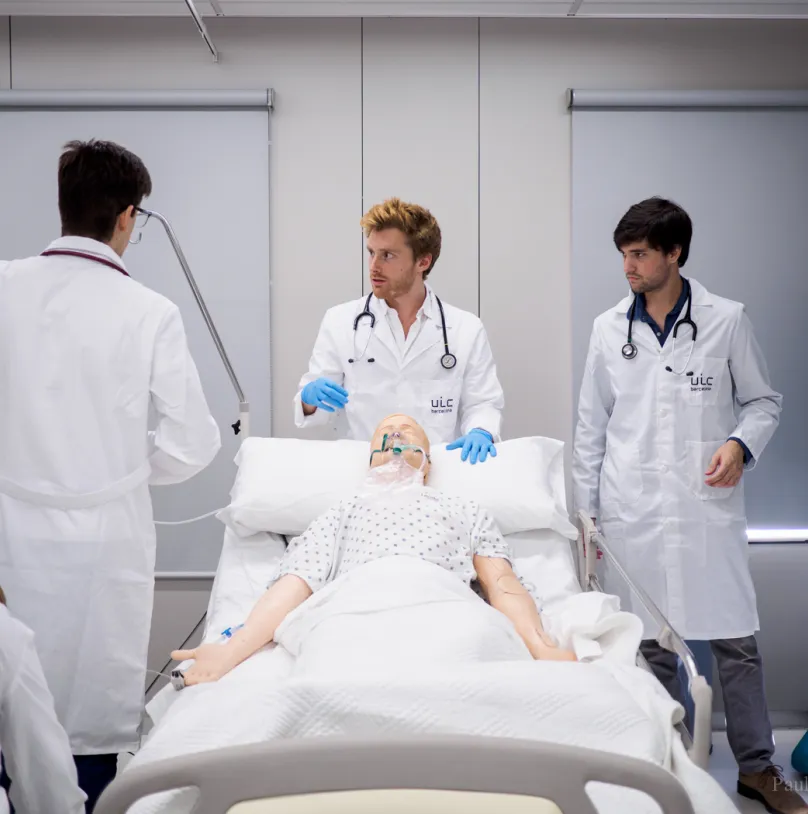
Centre de més de 1.000 m² amb àrees especialitzades per a pràctiques de simulació mèdica. Ofereix formació en entorns clínics realistes, la qual cosa permet als estudiants desenvolupar competències clíniques de manera avançada.
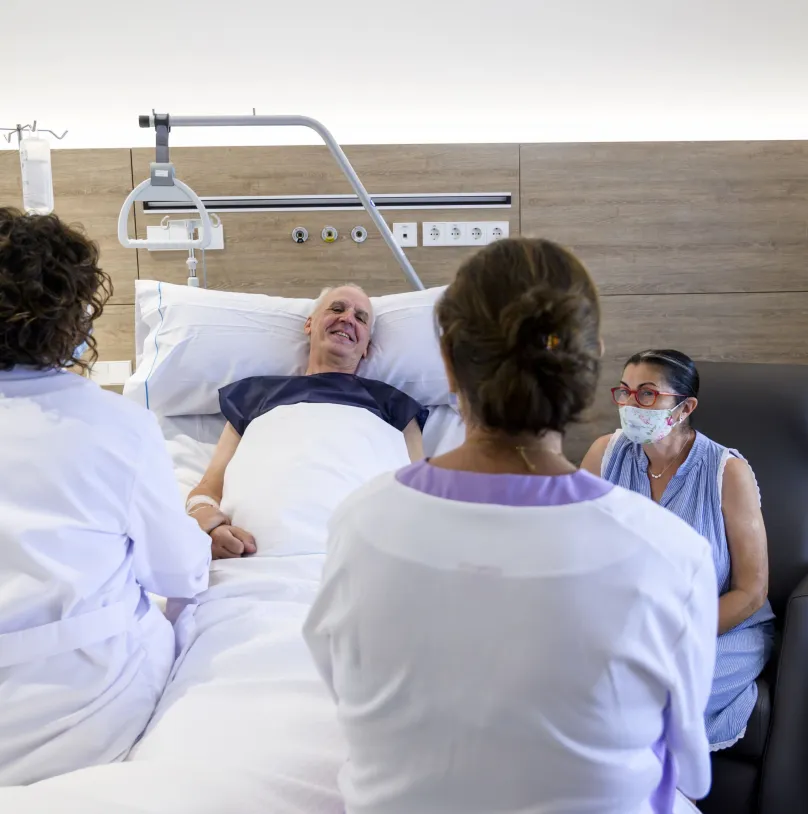
Primera clínica universitària especialitzada en atenció integral a pacients amb malalties oncològiques i no oncològiques que ofereix cures pal·liatives i millora la qualitat de vida de pacients amb necessitats avançades.
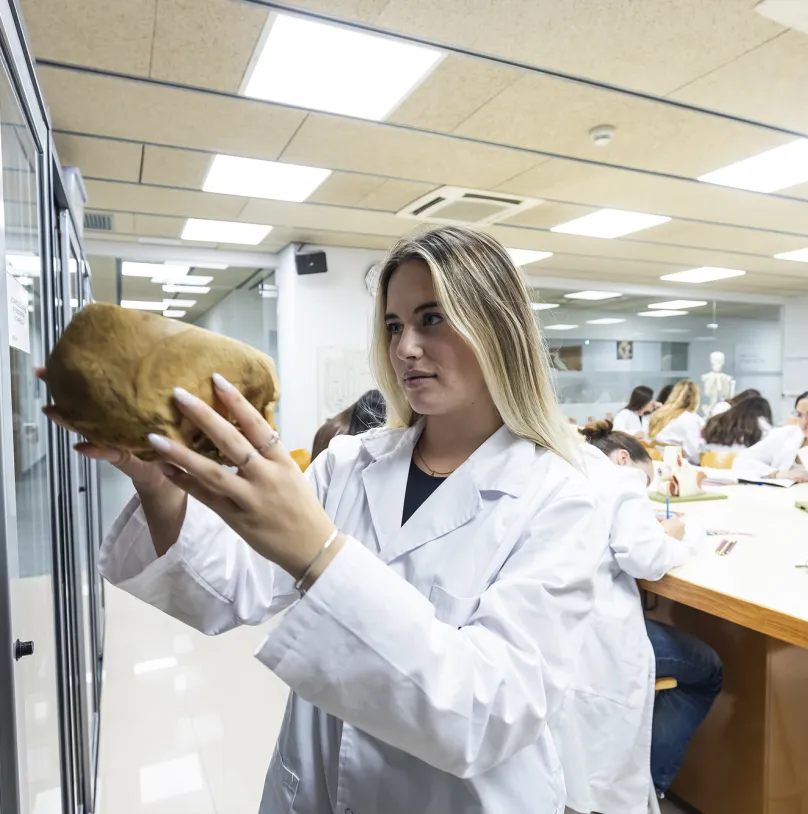
Espai modern de 250 m² amb tres laboratoris de dissecció i una osteoteca dedicats a la recerca i aprenentatge pràctic sobre anatomia humana. Ideal per a la formació quirúrgica i funcional.
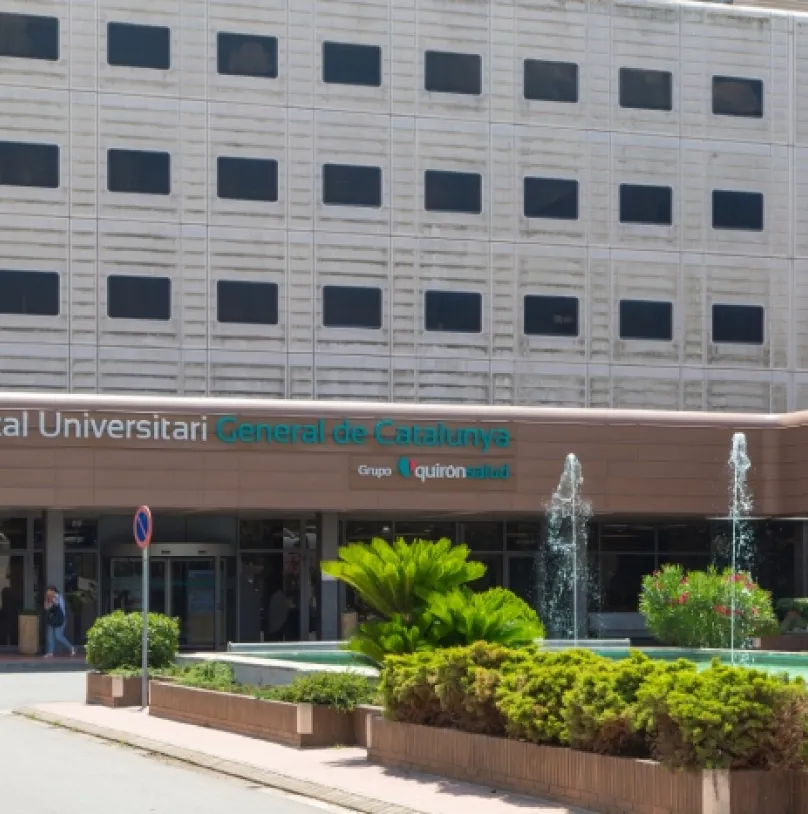
Integrat amb UIC Barcelona, aquest hospital permet als estudiants de Medicina viure una experiència clínica real. Les sinergies entre tots dos permeten una formació pràctica i una immersió total en el món hospitalari.
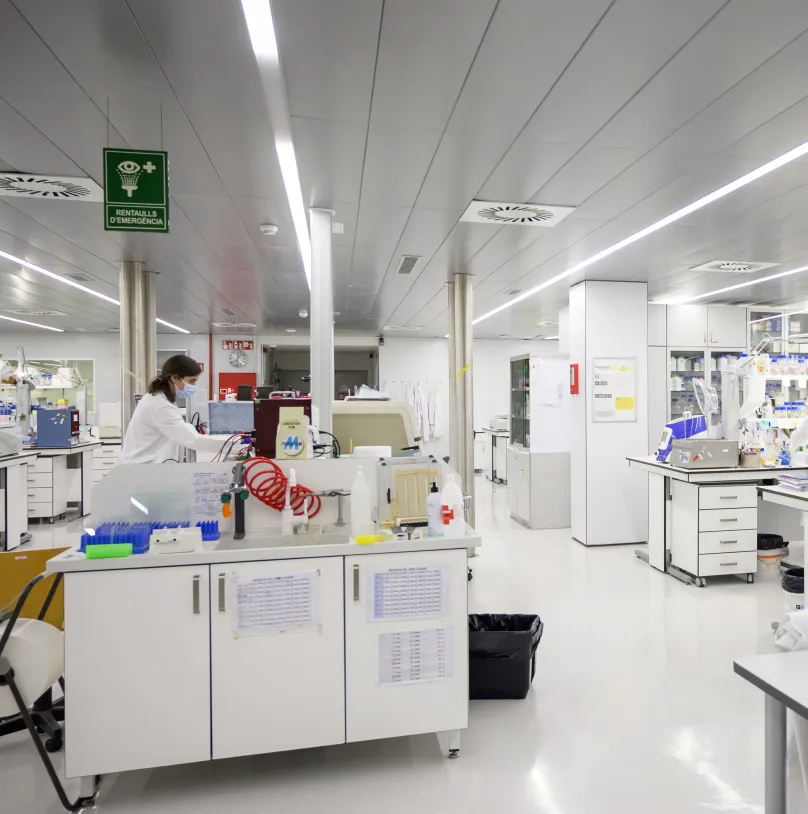
Instal·lacions dedicades a la recerca científica i a l’ensenyament de pràctiques mèdiques, equipades amb tecnologia avançada per facilitar l’aprenentatge en àrees com la bioquímica, microbiologia i altres camps essencials.
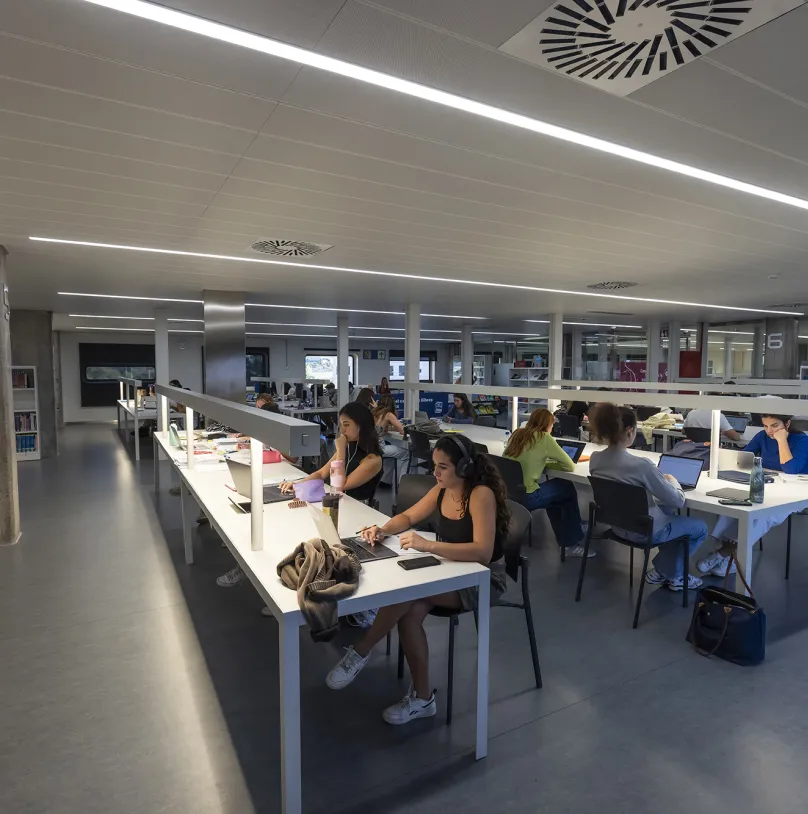
Un espai modern amb accés a recursos digitals i físics que dona suport a l’aprenentatge autònom i complementari, i ofereix material actualitzat i especialitzat per als estudiants de Medicina.
You will be capable of guiding any patient through the healthcare system.
We offer you multiple career opportunities within clinical practice, management, teaching and research.
In order to teach future professionals in the field of healthcare we have a teaching body that combines their teaching with exercising their profession in public and private hospitals and healthcare centres. They are also involved in important research activities both inside and outside the university. Direct contact with professional practice allows our professors and lecturers to transmit a comprehensive, multidisciplinary and human overview of the reality in the sector to students.
The University is organising open days for future university students who would like to know more about our institution and the programmes we offer.
Between June and September
The admission process for the Bachelor’s Degree in Medicine is aimed at applicants who would like to study Medicine at UIC Barcelona during the 2025- 2026 academic year. In order to start this process, applicants must follow the following steps.
If you want to begin the admission process you must fill out the admission application. Once you have taken this step, you will receive the codes to access the Admissions Portal. Please check the Promotions and Junk Mail folder.
On the platform, you will see the documentation that you must upload in order to take the tests. It is very important that you correctly mark your access route on the form since the documents you must upload will depend on the access route you mark.
Once all documents have been validated, you will receive an email with instructions to make the payment of €100 for the entrance exam. Once we receive your payment, we will be able to confirm your place for the entrance exam.
All of these steps must be completed before we close the admission process in April approximately.
See details of admission process
DATE TEST ADMISSION: Saturday, May 9, 2026
The admission test will be offered in two formats depending on your residence.
In both cases the schedule will be in the morning (approximately 9.00 h to 13.00 h).
The entrance exams are in Spanish and are multiple choice, except for the structured written interview. There is no penalty for wrong answers. Calculators cannot be used and we do not provide practice exams from previous years.
The entrance exam for the Bachelor’s Degree in Medicine consists of:
Test assessment and weighting
Applicants to the Bachelor’s Degree in Medicine are ranked according to the following items and weightings:
Specific biology, chemistry and mathematics knowledge test (25%)
Emotional intelligence test (25%)
Structured written interview (no percentage, can raise or lower decimals or maintain the mark)
Applicants will be able to know the decision within a period of three weeks from the day of the exam through the Admissions Portal.
There are different types of decisions:
Information to keep in mind
Record transfer (medical students from other institutions)
Accepting student record transfers is subject to the places that are available after the current academic year has closed. All of the studies to be validated or recognised will be reviewed during the academic year when admission occurs.
Each record transfer review request will be evaluated, and the applicant will be asked to come to an online interview to give them the results of the review. The interview dates for academic record transfers for the 2025- 2026 academic year are:
Credit recognition and transference
Once the student has been admitted, the Faculty of Medicine’s Transfers and Credit Recognition Committee will review the studies to be validated. Validation or recognition reviews will only be undertaken during the academic year when admission occurs.
An email will be sent to all admitted students who can request a transfer validation review to inform them of the documents required and the deadlines for submitting them.
Applicants who would like to earn other degrees at UIC Barcelona must fill in an online application for each of the degree programmes they have chosen on our website and provide the documents each degree programme requires.*
* Exam fees apply to each admission test taken.
You must take the entrance exam for each degree programme you choose.
Contact details
Anaïs Rey
arey@uic.es
Information and Admissions Service: 935 042 000
Reception of 1st year students takes place on Welcome Days at the beginning of the academic year.
1st Year Students are also issued the Book of support resources for students.
Article 9 of the Internal Regulations for Academic Management, approved on 05/15/2017, on enrollment credits by course and permanence regime, is modified for the Degree in Medicine in the following terms (applicable from the 2018-2019 academic year):
UIC Barcelona offers various fellowships supported by both public institutes (MEC or AGUAR) as well as private UIC Barcelona funds.
For further information, please check with our admissions department:
Each payment method is adhered to the specific financing conditions of each degree programme.
Please see the attached document for details on these conditions:
Those seeking undergraduate degrees at UIC Barcelona may be eligible for different discounts depending on their circumstances.
Discover the Nemesio Scholarships for the Medicine Degree at UIC Barcelona, a unique opportunity where we reward top students, allowing them to thrive in an environment that enhances their talent. These scholarships cover 100% of the first year and 80% of the following years, enabling you to develop your potential in a high-level academic and technological setting.
We believe in the potential of the best students and want them to be part of a university where excellence is a way of life. Here, you won’t just study Medicine—you’ll grow in an ecosystem designed to maximize your professional trajectory.
Find out more in the Scholarships and Grants section.
100 places.
Please visit here for the most up-to-date information.
There are different options of grants and financial aid. For more details, see uic.es/becas.
In the case of the Bachelor's Degree in Medicine, it is worth highlighting the Academic Excellence in Medicine Grants (BEA) - Nemesio Díez Foundation.
The Nemesio grant covers 100% of the fees for the first year of the degree and up to 80% of the fees from the second year on.
Teaching material can be found on the University’s digital platform and at the Library. There are no elevated costs associated with the material.
Theoretical-practical classes are held in the afternoon (usually between 2 p.m. and 8 p.m.). Practical laboratory sessions (biology, pharmacology, dissection, skeleton, etc.) usually take place in the morning. Clinical practicums at healthcare centres are also held in the morning.
All subjects have a strong practical component, combining theoretical and practical classes, in small groups, carried out in the laboratories, in the simulation center and, from the third year onwards, intensifying with internships in the clinical environment (supervised clinical internships). The last year (6th rotation) is eminently practical and includes 30 weeks of internships.
The mark you received in your most recently completed academic year is taken into account. Therefore, if you are in your 2nd year of upper secondary school, the mark you obtained from your 1st year will be taken into account. If you have already finished upper secondary school, we will look at the mark from your 2nd year and so on.
Yes. You must take into account the fact that the entrance examinations involve specific tests on biology, chemistry and mathematics at first year upper secondary level.
THERE WILL BE A SINGLE ENTRANCE EXAMINATION ON SATURDAY 10 MAY, 2025
Around 550.
The admission test will be offered in two formats depending on the student’s residence. - Students currently residing in Catalonia must take the exam in classroom format at the Sant Cugat Campus of UIC Barcelona. - Students currently residing outside Catalonia can take the exam in online format.
We do not have sample tests available
Yes, except for the structured written interview.
50 % is attributed to the marks from your academic record and 50 % from the entrance examinations.
From 9 a.m. to 1 p.m. approximately.
The entrance examinations last between four and five hours, which will be distributed as follows:
No, it is not necessary.
The results will be sent via email approximately 15 working days after the exams have been taken.
The waiting list will definitively close two weeks following the start of classes (end of September). Also, until the pass marks are published by the state universities, there will be little movement on the waiting lists.
You will receive a letter of admission containing information about the next steps to take in order to reserve a place on the course. This corresponds to 20% of the fee for the first year.
The reservation fee will only be refunded if you do not pass your upper secondary school or PAU (national Spanish university entrance examinations) exams. This clause is laid out in our General Terms and Conditions.
Article 9 of the Internal Regulations for Academic Management, approved on 05/15/2017, on enrollment credits by course and permanence regime, is modified for the Degree in Medicine in the following terms (applicable from the 2018-2019 academic year):
Spend a semester or a full academic year at one of your Faculty’s partner universities or find an institution abroad to do an internship.
If you want to know the specific requirements of outgoing mobility of the Degree in Medicine, download the document
Check out the "Study abroad" section to access all the information you need to know before, during, and after studying abroad.
In addition, you may:
If you are studying at another Spanish or foreign university, you can come to UIC Barcelona to study temporarily for one semester or a full academic year.
"If you want to know the specific requirements of outgoing mobility of the Degree in Medicine, download the document
The Alumni Ambassadors are volunteer alumni who will explain their experience at UIC Barcelona to you. With them you will be able to resolve any doubts that may arise about the chosen program, the University and your experience as a student.
Don't miss this magnificent opportunity to learn first-hand what it means to do a program at UIC Barcelona and the value it brings you in the development of your career. If you have any specific questions about the admission process, scholarships, visas or financial aid, you can contact directly admisiones@uic.es.