Fully booket Bachelor's Degree in Physiotherapy
PROGRAM CLOSED FOR THE 2026-27 ACADEMIC YEAR
You can submit your application for the 2027–2028 academic year


Discover a bachelor’s degree with a practical, global approach. At UIC Barcelona, you will train as a physiotherapist with an international perspective, benefitting from top-tier facilities and a teaching methodology that combines theoretical and practical classes from the very first year.
The Bachelor’s Degree in Physiotherapy at UIC Barcelona prepares you to successfully enter the job market with the necessary critical thinking and analytical skills to find the best solutions for patients. You will improve the quality of life of your patients, which means continuous contact with them and other healthcare professionals. We also promote teamwork at UIC Barcelona, so that you can participate in multidisciplinary and interdisciplinary groups to support your future professional development.
You will train in the Faculty’s facilities, where you will put your knowledge into practice across 1,000 m² of physiotherapy-specific gyms, the Biomechanics and Exercise Physiology Laboratory, and the Advanced Simulation Centre (CISA).
Additionally, we have a bone repository and a dissection laboratory to provide more precise anatomical learning, fostering synergies with other health disciplines by sharing a campus with Medicine, Dentistry, and Nursing at the Hospital General de Catalunya. This enriches your training with an interdisciplinary approach.
We are pioneers in Spain in implementing Objective Structured Clinical Examinations (ECOE) in the Physiotherapy bachelor’s degree. ECOEs allow you to perfect your skills and competencies in a controlled environment. Additionally, you will improve your decision-making and clinical abilities before working with real patients through simulations with actors/patients portraying clinical cases.
At UIC Barcelona’s Physiotherapy degree, we combine theoretical knowledge with solid practical training. Around 50% of classes are theoretical-practical, allowing you to apply learned concepts in a real-world setting from day one. Thanks to this methodology, you will develop the necessary skills to successfully tackle the challenges of the job market and provide the best care for your future patients.
Studying UIC Barcelona’s Bachelor’s Degree in Physiotherapy, you will follow a hands-on approach from the very beginning. You will undertake practical training from your first year in small groups, allowing for more personalised attention and maximising each session. This methodology will help you develop your clinical skills and gain confidence in a real setting, preparing you to successfully face professional challenges.
You will undertake internships at renowned hospitals, clinics, and sports centres, gaining real-world experience in various specialisations:
— Traumatology
— Neurology
— Cardiorespiratory physiotherapy
— Rheumatology
— Gynaecology
— Sports physiotherapy
— Paediatrics
— Geriatrics
— Teaching
— Management
— Research
— Orthopaedic manual physiotherapy
Thanks to our agreements with universities and hospitals worldwide, you will have the chance to participate in exchange programmes and international internships, broadening your professional horizons.
We have international mobility agreements with institutions such as the University of the Incarnate Word (United States), the University of Pavia (Italy), the Academy of Physical Education and Sport in Gdańsk (Poland), the Higher School of Economics, Law and Medical Sciences (Poland), Egas Moniz – Cooperativa de Ensino Superior, (Portugal), the Escola Superior de Tecnologia da Saúde de Lisboa (Portugal), Charles University (Czech Republic), Universidad de los Andes (Chile), Universidad de la Sabana (Colombia), Universidad de Santander (Colombia), Universidad de Santo Tomás (Colombia), among others.
At UIC Barcelona, we adapt to the evolving demands of the sector to offer you a global education that maximises your competences and skills. Our goal is to ensure that, upon graduation, you are fully prepared to stand out in a dynamic and competitive professional environment.

What made me choose Physiotherapy at UIC Barcelona were the facilities and resources. Having the privilege of studying anatomy with real bodies is incredibly helpful. The gym practice sessions are comfortable thanks to the space, the materials, and the support from the faculty. It is a university that truly cares for its students by training its teachers to a high standard. Thank you so much!
The Degree Programme in Physiotherapy in UIC Barcelona prepares participants to enter the workforce by teaching them the reflective and analytical skills which are necessary in order to work with patients to find the best solutions.
Physiotherapists have the opportunity to improve the overall quality of life of their patients, and are therefore responsible for maintaining regular contact with patients and other health professionals.
For that reason, it is important that students develop a sense of responsibility and commitment faced with our ever-changing society, while at the same time fostering the self-critical skills that enhances their learning. The UIC places a strong emphasis on teamwork in order to ensure successful interdisciplinary collaboration throughout students’ professional careers.
In order to achieve these ambitious goals, the programme offers a flexible and up-to-date curriculum with a close connection between theoretical content and practical classes in all areas of knowledge. Students also have the opportunity to carry out professional, clinical practica in physiotherapy centres and rehabilitation facilities.
All candidates who meet the general requisites and have completed the required access routes will be able to apply for entry. However, the recommended background is that of a person with previous studies in the area of health sciences, with a vocational attitude in relation to science and health and the following skills:
Director of the Physiotherapy Department and Vice-Dean of the Faculty of Medicine and Health Sciences
Dr. Daniel Romero Rodríguez
Graduado o Graduada en Fisioterapia por la Universitat Internacional de Catalunya.
Research in the Department of Physiotherapy is divided into three thematic topics. The first is related to the evaluation of the effects of physiotherapeutic interventions related to the application of manual and instrumental techniques and active exercise. The second examines the use of therapeutic exercise and movement control techniques to promote neuromotor development and treat of the locomotor and nervous system disorders. The third focuses on the assessment of functional and aerobic capacity, as well as the use of physical exercise as a rehabilitation tool in patients with cardiorespiratory and metabolic diseases.
The Department of Physiotherapy will be using the Biomechanics and Exercise Physiology Laboratory to carry out the studies.
You can check the details, objectives and composition of the three work groups exploring these areas here.
The Bachelor's Degree in Physiotherapy at UIC combines theoretical and practical classes from the very first year, and champions learning formats that go beyond the classroom. One example is the educational breakout, in which students must solve a clinical mission under pressure, putting their musculoskeletal knowledge to the test while developing key transversal skills, such as teamwork and stress management, in a challenging environment.
The clinical stays aim to give the student the possibility and the ability to come into contact with the health service user, and also the possibility to learn about the professional health system, its organizational structure and the real role they will play as a physiotherapist within this system.
Clinical stays also provide the student with professional contact and the application of the theoretical and practical knowledge acquired during their training period. These practices will shape the profile of the future professional physiotherapist.
There are two types of objectives: general objectives that are common in any internship period, and the specific objectives acquired and expanded depending on the characteristics of the centre.
Clinical stays (EC) for the Bachelor’s Degree in Physiotherapy at UIC Barcelona take place in the Module called Supervised Clinical Stays, with an academic weight of 40 ECTS credits (1000h) and are mandatory* (PE) to obtain the Bachelor’s Degree in Physiotherapy.
These 40 credits are developed in eight 5-credit subjects, which takes place during the last 2 years of the programme; EC1-EC3 are carried out in the 3rd year, whereas EC4-EC8 are carried out during the 4th year of the Bachelor’s Degree in Physiotherapy.
* PE: External practice
On the other hand, the Bachelor’s Degree in Physiotherapy has other centres with which an agreement has already been established to develop ECs in different locations around the world.
Internal regulations
The Final Degree Project (TFG) Module materialises in a single matter and subject, which consists inthe elaboration of a research project or report supervised by one or several instructors of the bachelor’s degree programme. These papers or reports must be defended before a jury as established by RD1393/2007.
The TFG is an independent and individual project that each student will prepare under the guidance of a tutor whose role will be to support and facilitate the learning process. This project will allow the student to show the educational content received and the skills acquired associated with the bachelor's degree programme in a comprehensive manner.
When designing the curriculum for the bachelor’s degree and the conceptualisation of the final degree project at the Universitat Internacional de Catalunya, we have considered that in order to offer high-quality personalised attention, the physiotherapist must first be able to interpret the scientific contributions that generate new perspectives on intervention and research, and also able to apply the different scientific methodologies in the construction of knowledge. Secondly, in response to the growing social demand for efficiency and effectiveness in health care, physiotherapists must not only be able to translate the results of scientific research to professional practice, but they must also actively and productively intervene in the different stages of scientific research processes. Therefore, training at the Universitat Internacional de Catalunya is also aimed at equipping the future physiotherapist with the skills needed to incorporate evidence-based physiotherapy to professional practice and become part the scientific progress in this discipline. For this important and specific reason, the subject "Design and Tools of Evidence-Based Physiotherapy Projects" has been proposed within the curricular path that will provide the foundation for the final degree project at a methodological level.
The main objective of this topic is for the student to demonstrate that they have acquired the knowledge, skills and competences in all the degree programme subjects in one project, and able to integrate them into a single document and acquire knowledge about their specific topic. The student must also demonstrate before a jury their ability to present and communicate the most relevant aspects of their project.
UIC Barcelona’s facilities are designed to provide you with a high-quality learning experience. With modern spaces equipped with advanced technology, you will develop your skills in real and practical environments. From specialised laboratories to training gyms, every corner of our university is designed to provide you with the best resources for your learning and professional development.
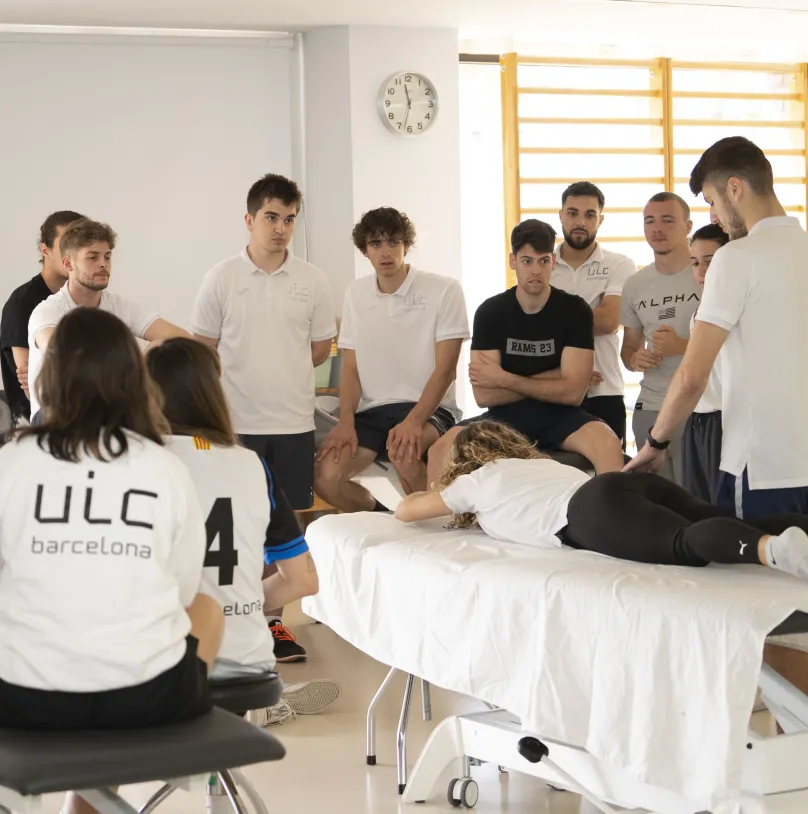
Our gyms are equipped with state-of-the-art equipment and spacious areas, making practical sessions and training easier. We have everything you need to gain experience in a professional and high-quality environment,
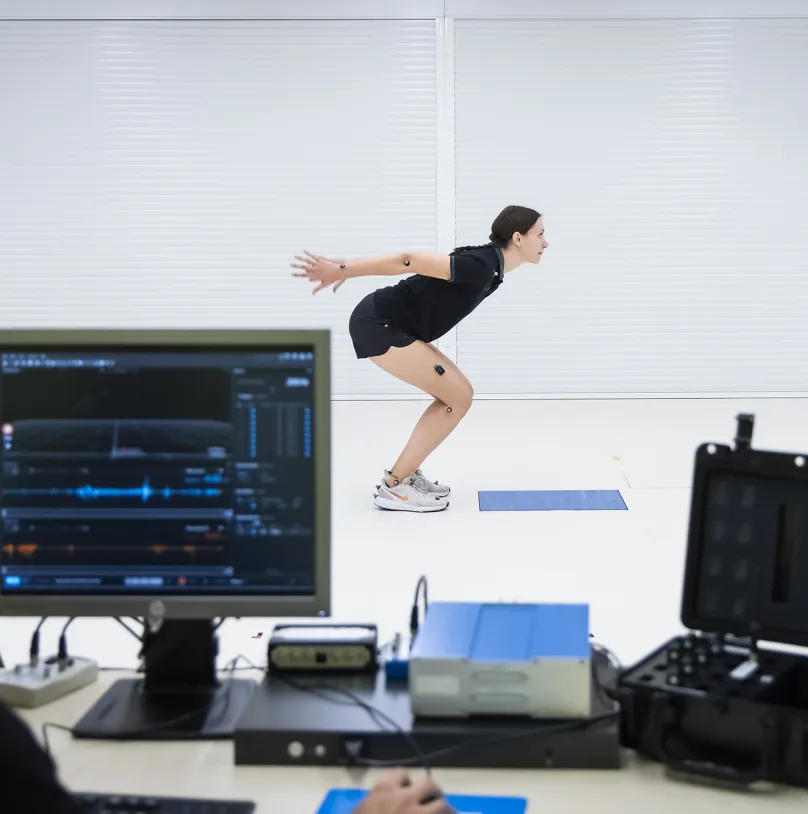
This laboratory allows you to study human movement with cutting-edge equipment, such as force platforms and motion analysis systems. It is an ideal space for applying classroom learning to practice.
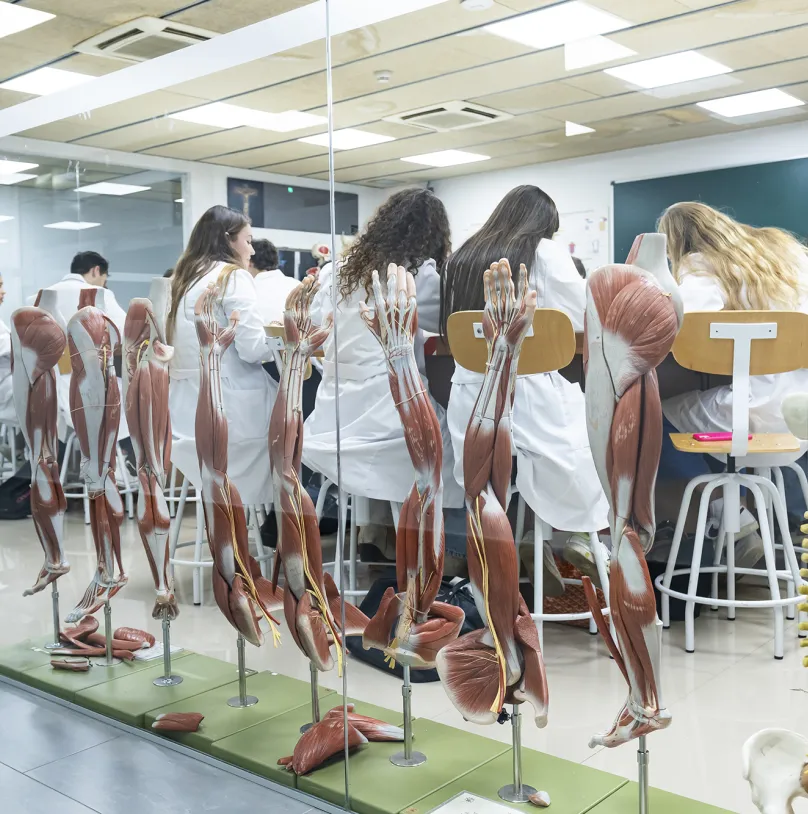
UIC Barcelona’s bone repository and dissection room provide a unique space with real human bodies and anatomical models. Here, you will study human anatomy directly and in detail, enriching your practical training in Physiotherapy.
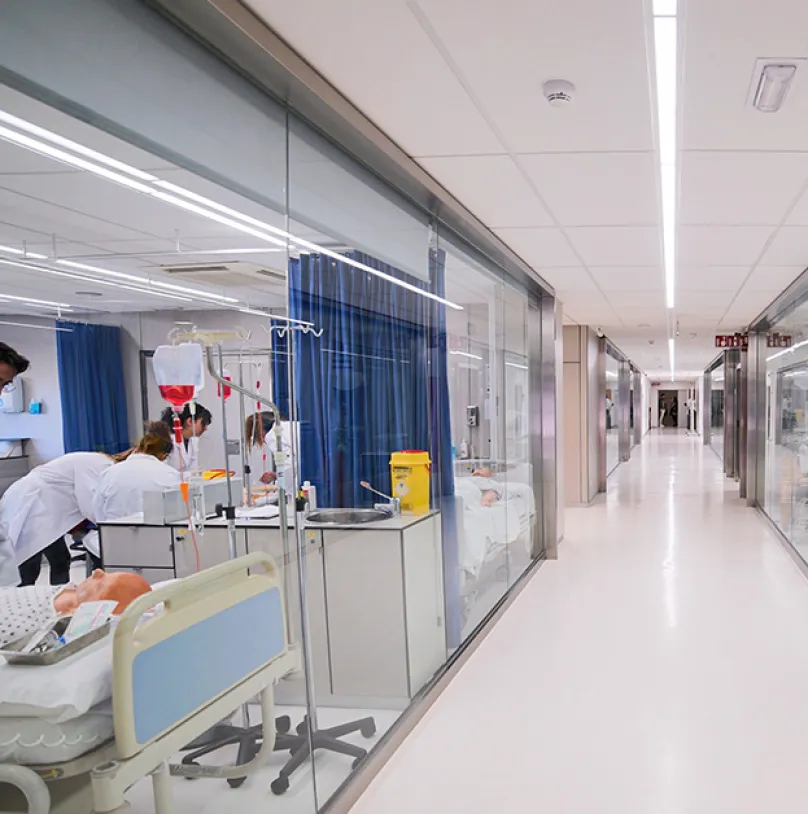
CISA offers state-of-the-art simulators to help you train your clinical skills in a controlled environment. This facility allows you to face real-life situations safely, preparing you for your professional future with the best available resources.
At UIC Barcelona, we understand the importance of theoretical and practical training so that you become a good professional.
In order to teach future professionals in the field of healthcare we have a teaching body that combines their teaching with exercising their profession in public and private hospitals and healthcare centres. They are also involved in important research activities both inside and outside the university. Direct contact with professional practice allows our professors and lecturers to transmit a comprehensive, multidisciplinary and human overview of the reality in the sector to students.
CADELLANS ARRÓNIZ, Aïda
Department of Physiotherapy
acadellans@uic.esTel. +34 932 541 800 Ext. 5734, 5732

The University is organising open days for future university students who would like to know more about our institution and the programmes we offer.
Between June and September
To pre-register for undergraduate studies at UIC Barcelona, you will need to complete the application form available via the following link:
It is recommended that international students willing to join the degree in Physiotherapy and coming from non-Spanish speaking countries have a Spanish level equivalent to level B2.
In order to reserve a place on the programme, admitted candidates must pay 20% of the first year fee upon receiving their letter of acceptance.
The remaining 80% is due after enrolment.
For more information:
Programme applicants may come to UIC Barcelona from different academic backgrounds. Click on the following link for detailed information on the route most pertinent to you:
Research in the Department of Physiotherapy is divided into three thematic topics. The first is related to the evaluation of the effects of physiotherapeutic interventions related to the application of manual and instrumental techniques and active exercise. The second examines the use of therapeutic exercise and movement control techniques to promote neuromotor development and treat of the locomotor and nervous system disorders. The third focuses on the assessment of functional and aerobic capacity, as well as the use of physical exercise as a rehabilitation tool in patients with cardiorespiratory and metabolic diseases.
The Department of Physiotherapy will be using the Biomechanics and Exercise Physiology Laboratory to carry out the studies.
You can check the details, objectives and composition of the three work groups exploring these areas here.
UIC Barcelona offers various fellowships supported by both public institutes (MEC or AGUAR), as well as private UIC Barcelona funds.
For further information, please check with our admissions department:
Those seeking undergraduate degrees at UIC Barcelona may be, also, eligible for other different grants.
UIC Barcelona is committed to ensuring that nobody with a true aptitude and zest for learning should have to drop out of a degree for financial reasons. Student Services offers information and personalised assistance so that students can access these grants and financial aid.
90 places.
Please visit uic.es/salud for the most up-to-date information
No, the teaching material can be found on the university’s digital platform and in the library.
The price includes the gown, scrubs and size for the stretcher.
You can find out all the various options including grants, discounts, and fee waivers, as well as the terms and conditions for loans on our website.
If you have an average mark of 8 or higher in your first year of upper secondary education or a 9 or higher in your first year of Higher Vocational Education and Training (CFGS), you are eligible for a Grant for Academic Excellence (uic.es/grants), which entitles you to an 80% discount every year of study.
Theoretical-practical classes are held in hours between 8.00 a.m. and 3.00 p.m. from Monday to Friday.
Practical sessions will be carried out in small groups in our facilities (gymnasiums) in all four years of the degree programme. Clinical residences or hospital placements will start in third year.
Yes.
Yes.
If you have begun but not finished your university studies or have requested an academic record transfer, you may request that your previous academic merits be recognised once you have been accepted. In order to do so, you must provide a series of documents within the established timeframe.
Yes, to gain admission into the Bachelor’s Degree in Physiotherapy, you must take the entrance exams regardless of your situation.
As this is a private university, there is no cut-off requirement. Admission into the bachelor’s degree will depend on the outcome of the relevant entrance exams and the average mark from your academic record.
50% of the academic record, 40% of the admission tests and 10% of the personal interview.
For students coming from any pathway except Higher Level Vocational Training:
For Higher Level Vocational Training students:
You can ask for a specific date, however you must wait from confirmation from the Information and Admissions Service who, once they have looked over your documentation, will confirm the exam dates via email.
We do not provide past papers from previous years. And in the case of the psychometric test you can search on the internet for examples so you can have an idea of the type of test it is.
Yes.
Higher than B1.
The tests are done online from 9.00 a.m. to 11:00 a.m. on the date indicated.
The results will be sent to you by e-mail within a period of 10 working days after taking the exams.
No, you can only attend one sitting per academic year.
The waiting list will definitively close two weeks after the start of classes (end of September).
It will be impossible to know the chance you have of being accepted until all six sittings have been held and the respective waiting lists have been cross-checked. What’s more, until the cut-off marks are published by the state universities, there will be little movement on the waiting lists.
You will receive a letter of admission containing information about the next steps to take in order to reserve a place on the course, which corresponds to 20 % of the fee for first year.
The remainder is payable in three payments: 40% at the time of enrolment (throughout the month of July), 20% at the end of January and the last 20% at the end of March.
The reservation fee will only be fully reimbursed in the event you do not have the academic requirements to complete enrolment.
This clause is laid out in the General Terms and Conditions
As a student in this degree programme, you may complete part of your degree or a work experience placement abroad and receive academic recognition.
Spend a semester or a full academic year at one of your Faculty’s partner universities or find a company abroad to do an internship. You may also:
For information about everything you need to do before, during and after your mobility stay, check out the "Study abroad" section and download all the documentation specific to your Faculty:
If you are studying at another Spanish or foreign university, you can come to UIC Barcelona to study temporarily for one semester or a full academic year.
To find out all the steps to follow before, during and after mobility, consult the “Study at UIC Barcelona” section.
If you would like to find out more about the specific incoming mobility criteria for this programme, contact the Department of International Relations:
The Alumni Ambassadors are volunteer alumni who will explain their experience at UIC Barcelona to you. With them you will be able to resolve any doubts that may arise about the chosen program, the University and your experience as a student.
Don't miss this magnificent opportunity to learn first-hand what it means to do a program at UIC Barcelona and the value it brings you in the development of your career. If you have any specific questions about the admission process, scholarships, visas or financial aid, you can contact directly admisiones@uic.es.